
One of the greatest stories of history is now largely ignored, not only in secular circles but in the Church. Shame on the Church! I for one will proudly and loudly stand up and defend the Biblical Flood – worldwide and catastrophic.
Please forgive me for any ugly ads or those pushing false beliefs.
It’s not as if there’s no evidence for a colossal flood – there’s plenty. If you’re aware of some of it and you still choose not to consider it, you’re robbing yourself of a huge chunk of Biblical scripture, essential doctrine and support for the Biblical origin of life. The problem is that people either just don’t want to know, or they’ve been convinced that it’s nothing more than myth. Myth there most assuredly is… and legend. In fact, there are legends connected with an ancient worldwide flood found in the records of many ancient cultures, including the cradles of Western civilization, Mesopotamia and ancient Greece.
MESOPOTAMIA
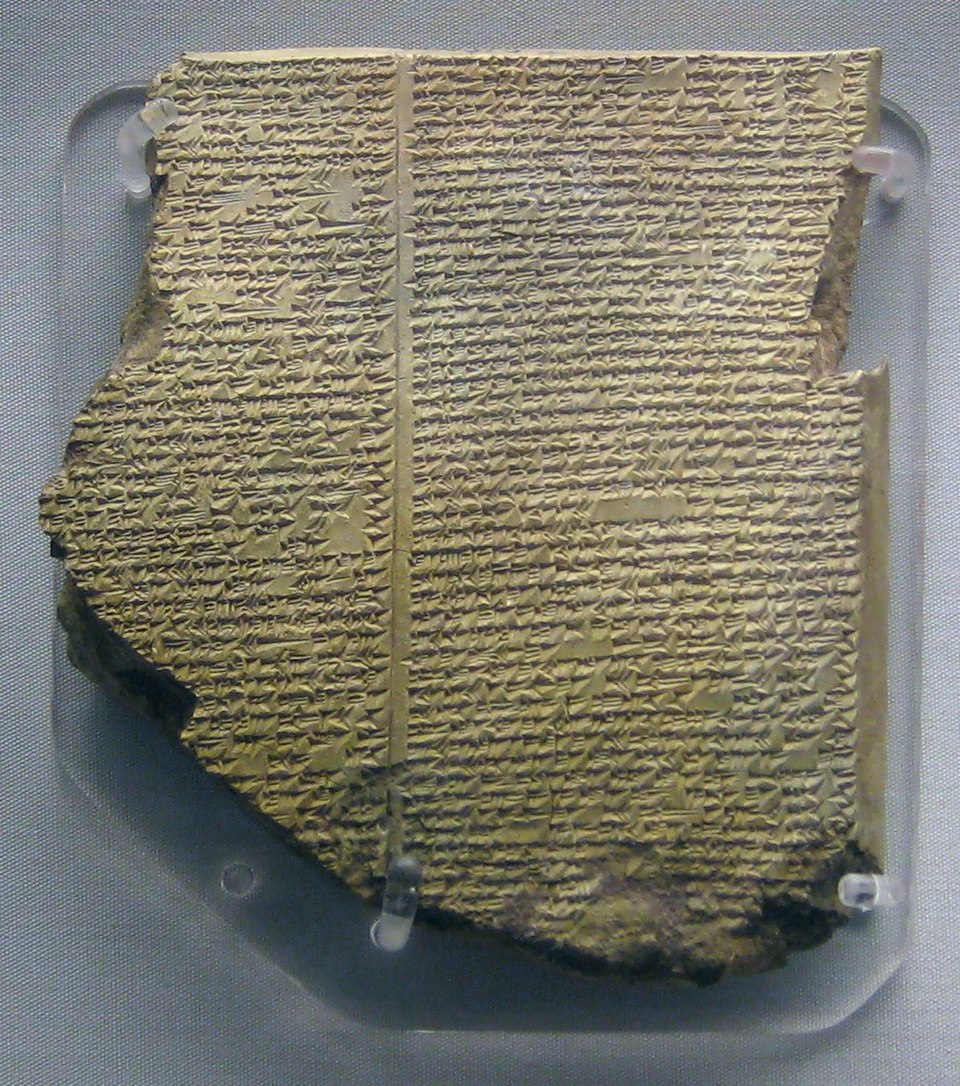
The Epic of Gilgamesh is a mythical story which was a central part of the ancient Assyrian culture. However, it contains reference to the great Flood and to one man who survived it and lived many hundreds of years. Other accounts from that part of the world describe “messengers of the gods” who taught the people before the Flood – corresponding loosely with reference in Genesis to the “Sons of God” and “the Nephilim”, at a time when people lived hundreds of years, just as the Bible says they did.
After the Flood, according to the library at Nineveh, the messengers were gone and people lived much shorter lives. Even secular historians will admit to the details of the Epic being remarkably similar to those of the Bible. Of course, they will insist that the Biblical account plagiarized the Mesopotamian myth. They say this because we have clay tablets from Nineveh recording the Epic, while no written Biblical account appeared for hundreds of years after the Mesopotamian story. The simple answer to this is that Hebrews never or rarely used clay tablets – probably in part because clay wasn’t so readily available in Canaan. Bible writers had to use materials which didn’t survive so long, and they relied on word of mouth.
WAX COVERED TABLETS
A tacet admission was made on a BBC documentary in this regard. The Mesopotamians not only used clay but also wrote on wax covered tablets. In fact, the bulk of their writings were formed on wax, not clay (3). Unfortunately, say the experts, wax documents were never going to last long anyway, and many wax cuneiform records were destroyed by the invading Medes when they burned down the Nineveh library.
The library had been instituted by Ashurbanipal, who gathered as much ancient wisdom and as many writings as he could into one location.
The good news is that the fire baked the clay tablets which were buried under rubble, and so they survived the ages. My point is that in one breath the experts relegate and poo-poo the Bible’s account of the Flood due to lack of original documents, and in the next they lament the absence of documents which must have been real but were lost from the Assyrian capital. Isn’t this hypocrisy?
ATLANTIS
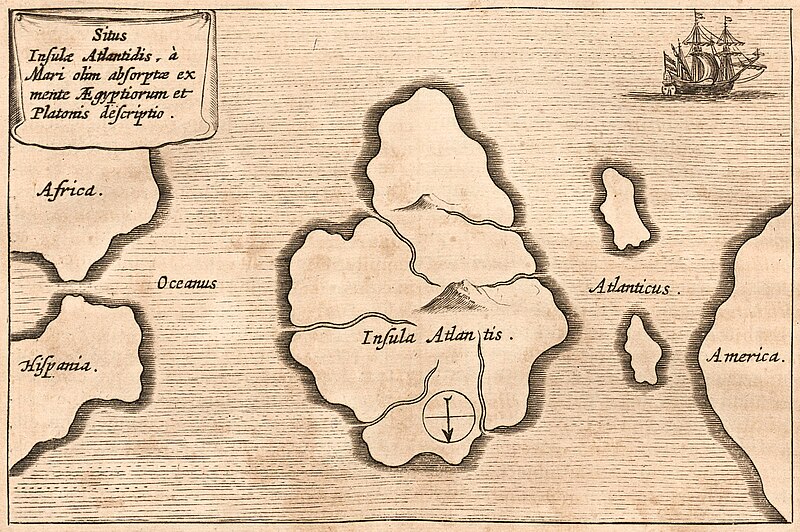
Plato’s “Atlantis” is a remarkable piece of literature. Said today to be entirely fictional and a tool only for Plato to demonstrate some principles of government, it describes a group of dignitaries including Socrates giving defense for what they believe to be the ideal state. In the process they speak of the sinking of Atlantis in earthquake and flood, and a wider deluge affecting even Athens, thousands of years before Plato’s time. They talk of it as a real story having been passed down through the generations (1).
Of course Atlantis may indeed be entirely mythological, but numerous legends from ancient cultures around the world, telling stories of a worldwide flood, have been documented (2). Are they all myth, or are they perhaps legends containing a kernel of truth?
Ancient flood accounts vary in detail. However, it makes good sense that as humanity spread out around the world in all directions from Mesopotamia, such a profound story would be passed on through the generations, but changing in detail as it went. Changes would be more intense as people groups lost or intentionally gave up the knowledge of God and the nature of the Flood.
HARD EVIDENCE
For hundreds of years in Western culture the commonly understood explanation for the rock record found around the world, particularly that of sedimentary layers, was the Biblical Flood. Lyell and others moved the world away from that conviction, but for me and many others the evidence for the Flood is obvious. There are, as one Christian leader has said, “Billions of dead things buried in layers of sedimentary rock all over the earth” (not a word for word quote). Sediments are mostly deposited by water, and some of those sedimentary layers, buried one on top of the other, cover entire continents and even extend to other continents.
THE LAND-WHALE
A common secular explanation for entire herds of animals being found preserved in rock- in some cases thousands of them – and for marine fossils being found with land animal fossils, and for the remains of schools of whales being found in the middle of continents, is that there were once seas where there is now land. Changes occurred sometimes over millions of years, or they occurred suddenly. One thing you can be sure of is that animals do not get fossilized over millions of years: they would rot or be eaten within a very short time.
The secularists have taken us on a complete route away from catastrophe, via “the present is the key to the past”, back to punctuated catastrophism – but this time with God removed from the equation. However, I’m convinced that what explains it all more than adequately is the Biblical Flood: the explanation which was there all the time.
The Flood was not just a nasty rainstorm which made the water level rise, and on which Noah floated a little tub of a boat with an elephant and a giraffe clinging to the sides: it was a world-wide, year-long cataclysm in which continents divided, the bulk of life on earth got buried in mud or smashed to smithereens, and in which the judgment of God was poured out on the earth. Jesus Christ believed in it:
“Just as it was in the days of Noah, so also will it be in the days of the Son of Man. People were eating, drinking, marrying and being given in marriage up to the day Noah entered the ark. Then the flood came and destroyed them all” (Luke 17:26-27).
If it’s good enough for Jesus to believe and preach, it’s good enough for me.
1 BBC Radio 4 IN OUR TIME: Plato’s “Atlantis’.
2 https://answersingenesis.org/the-flood/flood-legends/
3 BBC Radio 4 IN OUR TIME: “The Library at Nineveh”.
 Fuel for Faith, Food for Thought