
Is it true that God will have to take believers to heaven before the Tribulation so that they don’t suffer His wrath along with everyone else? This, the standard view in evangelical circles, was my reasoning in relation to rapture timing for twenty-eight years, but not any longer.
As a sample of this post, I would like you to ask yourself how God’s “elect” will survive Tribulation events, as Christ describes in his Olivet Discourse, so that they can be gathered from the four winds by angels:
And he will send his angels with a loud trumpet call, and they will gather his elect from the four winds, from one end of the heavens to the other (Matthew 24:31).
FLAWED THEOLOGY
This very day I heard a minister on Christian radio stating that Noah’s escape from the Flood was a type of the pre-Tribulation rapture. Among his comments, he said confidently that Noah was shut inside the ark seven days before the Flood began. He was wrong. Here’s the truth:
“…and the floodgates of the heavens were opened… “On that very day Noah and his sons…together with his wife and the wives of his three sons, entered the ark” (Genesis 7:11-13).
Noah was shut in the ark on the very day the Flood started-not seven days before. Here’s a warning that pre-Tribulation advocates have the habit, as I did, of cherry-picking phrases from the Bible, and using them to say what they want. I know what I’m talking about, because I’ve done the same thing myself. You can find my comments on Noah and Lot as types of the pre-Tribulation rapture in another post: search in the small search box at the top of this page.
PRE-TRIBULATION LOGIC
The most common defense of the pre-tribulation rapture position employs Paul’s phrase, “God has not appointed us to wrath” (1 Thessalonians 5:9). Believers quote this as if it’s an unarguable, clinching piece of Biblical evidence for the pre-Tribulation rapture. If we were alive on the earth during the Tribulation, they reason, we would suffer the wrath of God along with everyone else, and this cannot happen. Therefore God, being a God of love, will take us to heaven before the “seven year” Tribulation begins.

It’s true that Paul was discussing end-times events with the Thessalonians when he wrote that God has not appointed us to wrath, but let’s put this phrase from Paul’s letter into its proper context. The complete verse which contains this phrase reads as follows:
“For God did not appoint us to suffer wrath, but to receive salvation through our Lord Jesus Christ“ (1 Thessalonians 5:9).
In this verse Paul was contrasting the wrath of God with salvation from sin and death-not announcing a pre-tribulation rapture.
In a similar way, Paul told the Ephesian church that when they were “dead in trespasses and sins” in their un-saved life, and when they were following “the prince of the power of the air”, they were “children of wrath, like the rest of mankind” (Ephesians 2:1-3 ESV). In contrast, he said, God “made us alive together with Christ” because of his mercy (verse 4).
SAINTS OF WRATH?
I must confess to once sharing the same selfish, myopic view of the rapture in relation to wrath. I wanted to escape the possibility of trials, and so embraced the logic. But if we really think it through, we find the logic to be faulty. Being around on earth during the events foretold by John in Revelation, by Jesus and by prophets like Zechariah, does not at all expose us to the wrath of God. If it does, what can we say about Jewish believers alive during the Tribulation: are they under the wrath of God? What about followers of Jesus, spoken of in the Tribulation chapters of Revelation-will they suffer His wrath? And what about those “left behind” by a pre-Tribulation rapture: will they also be under the wrath of God?
FAITHFUL TO JESUS
There will be believers on the earth during these times, according to Revelation:
There will be no rest day or night for those who worship the beast and its image, or for anyone who receives the mark of its name. This calls for patient endurance on the part of the people of God who keep his commands and remain faithful to Jesus. Then I heard a voice from heaven say, “Write this: Blessed are the dead who die in the Lord from now on.” (Revelation 14:11b-13).
The prophecies of Jesus reveal significant problems in this regard. In his “Olivet Discourse”, he warned believers about what they would witness and experience, not only in the coming destruction of the temple and of Jerusalem at the hands of Roman legions, but in end times before his return. Pre-Tribulation teachers have to resort to claiming that the believers Jesus was referring to in these passages are Messianic Jews. I’ve written about this claim in another post and in my book, but the point today is that whoever you claim these believers to be, they will be living on the earth during end times, among all the trials and wars and deceptions, and some of the judgments. What are we to make of this? Will God be pouring out His wrath upon them?
THE SELFISHNESS OF THE PRE-TRIBULATION POSITION
The self-centred pre-Tribulation believer (and again, I was once one of them, so I know what I’m talking about) virtually ignores this problem, and waves it away by assuming that these people were “left behind” at the rapture because they deserved to be. They weren’t yet saved, or they were half-hearted Christians, or they were backslidden, or they were Jews who hadn’t accepted Jesus as their Messiah, therefore they deserve it. They deserve to be left behind and to suffer all the trials of God’s wrath.
On top of this, we’re being entirely unrealistic and selfish if we choose to forget that throughout history, multitudes of Christian believers have suffered wars, famines and persecutions. Of the third of the population of Europe which died from the Black Death in the middle ages, many were Christians. Today, around the world, thousands are in prison or suffering violence because of their faith in Jesus. Are they under the wrath of God? No, of course they are not. They’re under the wrath of man or perhaps Satan, but they are still children of God.
THE ELECT: ETERNALLY SAVED, DESPITE TRIBULATION EVENTS
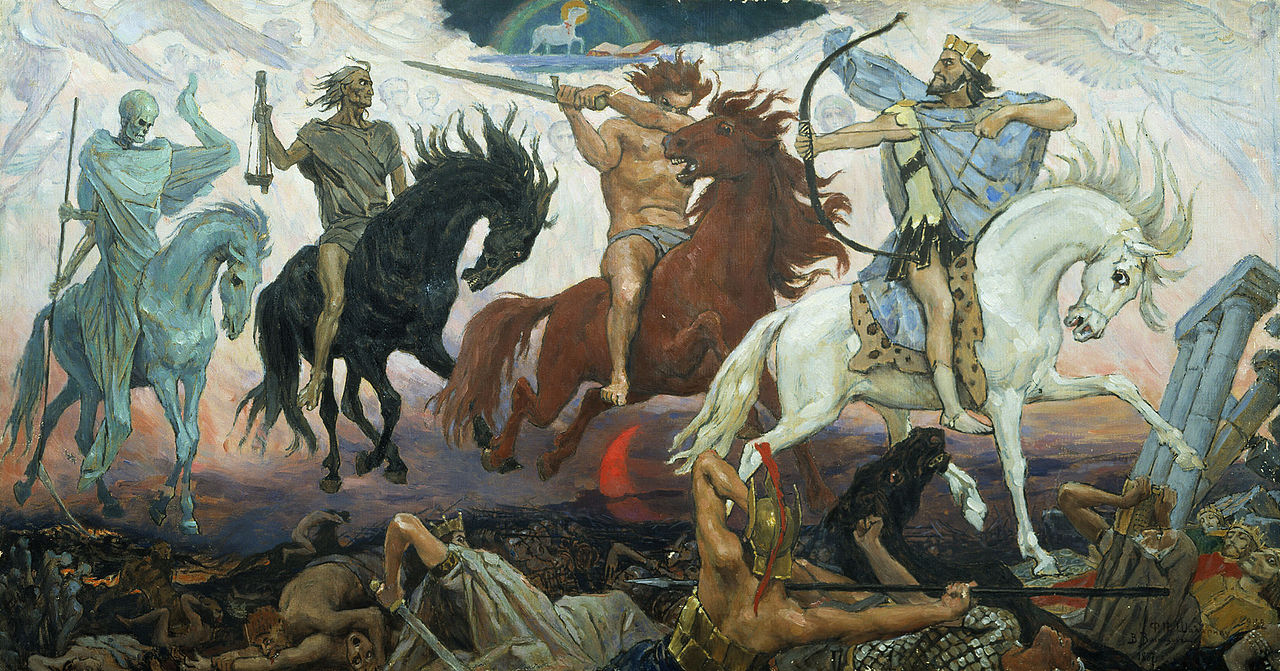
Strikingly, Jesus when speaking of end-times events describes his beloved elect as living on earth through Tribulation events. In the midst of colossal wars, deceptions, plagues and persecutions, Jesus and his angels will gather them at his physical, visible return. And it’s no good trying to dismiss the elect as a Jewish remnant hiding in the desert of Revelation chapter 12, because Jesus said that the angels will gather them from “the four winds”, in other words, from all over the world.
They therefore will not have suffered from the wrath of God at all. Even if they had been killed, they did not die under the wrath of God, but as a child of God, destined for heaven.
“Then will appear the sign of the Son of Man in heaven. And then all the peoples of the earth will mourn when they see the Son of Man coming on the clouds of heaven, with power and great glory. And he will send his angels with a loud trumpet call, and they will gather his elect from the four winds, from one end of the heavens to the other (Matthew 24:30-31).
THE NATIONS WILL SURVIVE
We think of the events of the Tribulation as a being a blanket judgment of wrath upon the whole earth, with all unbelievers being wiped out. However, according to Zechariah, the earth will not have been completely wrecked by the judgments of God, and there will still be human survivors and even nations when it’s all over:
Then the survivors from all the nations that have attacked Jerusalem will go up year after year to worship the King, the Lord Almighty, and to celebrate the Festival of Tabernacles. If any of the peoples of the earth do not go up to Jerusalem to worship the King, the Lord Almighty, they will have no rain (Zechariah 12:16-17).
A BLESSING FOR ENDURING THE TRIBULATION-NOT A CURSE
In the Olivet Discourse Jesus spoke not of “escaping” trials, but of “enduring” them:
But he who endures to the end shall be saved. And this gospel of the kingdom will be preached in all the world as a witness to all the nations, and then the end will come (Matthew 24:13-14).
This is in agreement with what John was told in the Revelation:
This calls for patient endurance on the part of the people of God who keep his commands and remain faithful to Jesus (Revelation 14:12).
Believers are not told in Revelation or anywhere else that they suffer because they deserve it. Instead, they’re promised a special blessing if they lose their lives for the name of Jesus:
Then I heard a voice from heaven say, “Write this: Blessed are the dead who die in the Lord from now on.” (Revelation 14:13).
WHY THE SEVEN LETTERS OF JESUS?
The letters of Jesus to the churches in Revelation prepared believers for persecution and trials, which Christians at that time certainly suffered, and encouraged them to endure There was no early rapture for them:
Be faithful, even to the point of death, and I will give you life as your victor’s crown (Revelation 2:10c).
Why are the seven letters of Jesus included in the Revelation? If they’re addressed only to pre-Tribulation believers, why are they included in a book which discusses the Tribulation? Does it make sense that they’re not relevant to the rest of the book? Jesus gives us an answer in this regard, in the Revelation itself. It’s after, and not before John describes the events of Tribulation, that Jesus tells us this:
“I, Jesus, have sent my angel to give you this testimony for the churches” (Revelation 22:16).
The entire Revelation, not just the first three chapters, is for the churches, says Jesus Christ. More than that: the letters are relevant to those who will live through the Tribulation.
Yes, the word “Church” in its collective sense is not used after Revelation chapter three, but neither is it used to describe anyone in heaven. In fact, it isn’t used at all, even in the first three chapters. Instead, it’s individual believers who are encouraged to heed the warnings, and individual believers are spoken of during the events of the Tribulation.
Thank you for reading! I will continue the discussion of rapture and wrath in a future post-possibly next week.
 Fuel for Faith, Food for Thought