
Is the New Testament and the Bible we now read completely different to what was originally written, so that we can’t rely on it? This is the claim of skeptics and cults alike, but there are answers to their accusations, and very good ones. I’ve commenced a proverbial “deep-dive” into the subject, and I’m already finding it both fascinating and faith-building.
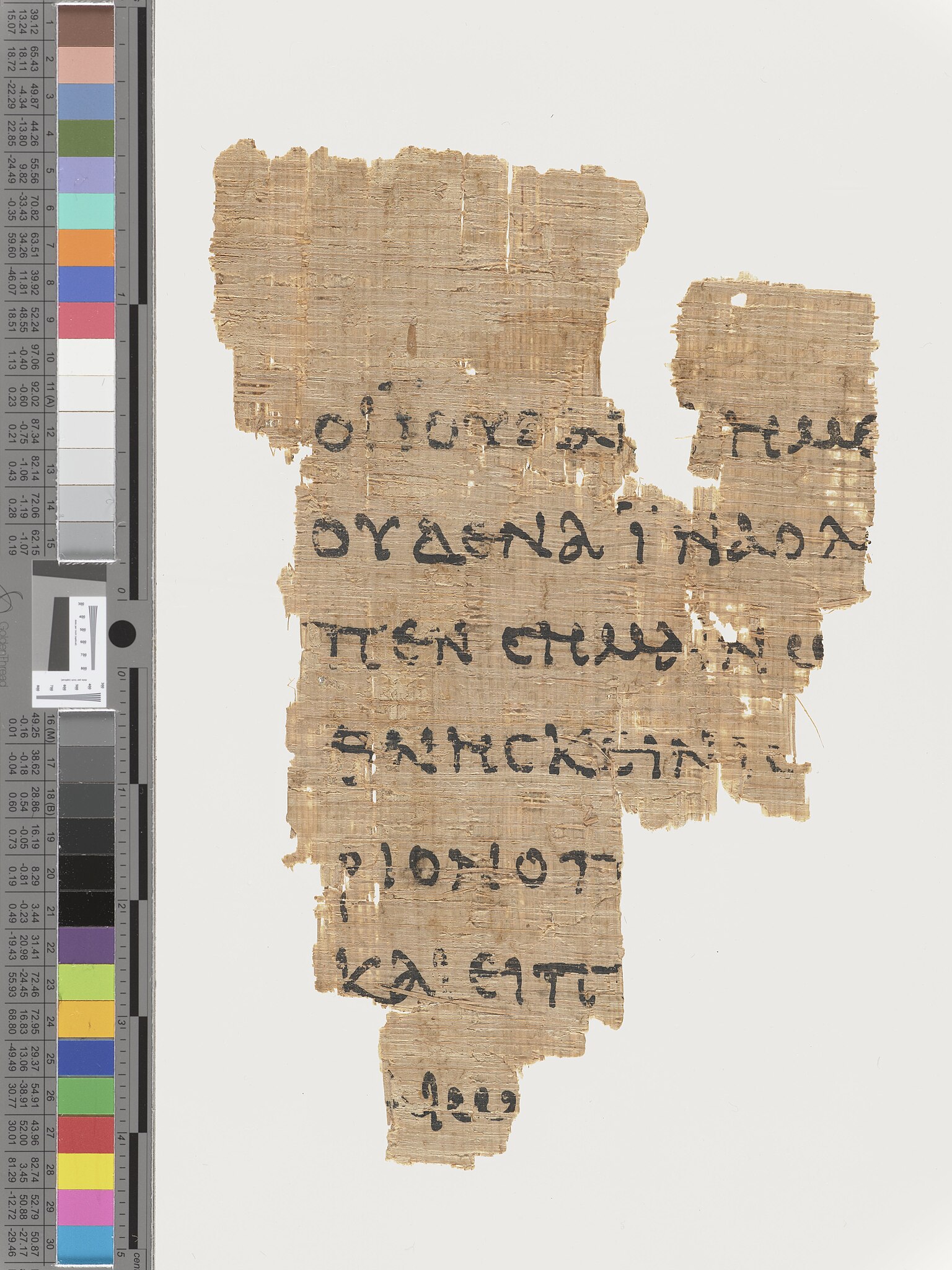
Date 125–175.
Dr. Daniel Wallace is the senior professor of New Testament at Dallas Theological Seminary. He regularly interacts with other top-notch New Testament scholars, including the well-known skeptic Barth Ehrman. I will here review my own summary of the first half of a video presentation by Dr. Wallace, then continue with the rest of it.
DIFFERENCES
Wallace explained that while there are indeed variants (differences) in New Testament manuscripts, the vast majority – 99.98% of them – make no change whatsoever in the meaning of any passage. Many of them are simple spelling differences. The New Testament was written largely in Greek, and it’s impossible to translate Greek to English in a word-for word fashion, therefore differences in translations are inevitable. However, the meaning and message remain the same.
NO CHANGE IN MEANING
Wallace affirms that no essential doctrines are altered by variants. The earliest manuscripts in all cases confirm, or at least do not deny, Christ’s deity, his virgin birth, his sinlessness, his death on a cross, his bodily resurrection, and his coming again.
NICEA
The claim of some that Constantine forced the idea of the divinity of Jesus upon the Church at the first Council of Nicea (or NIcaea) is easily shown to be false. In his example, Wallace explains that one-hundred and twenty five years before this Council (which was in 325) the first verse of John’s gospel expressed the truth exactly as we know it now, in P (papyrus) 66:
“In the beginning was the Word, and the Word was with God, and the Word was God” (John 1:1).
Writings of the early Church Fathers, from the end of the first Century, commonly quote from the very Scriptures which we read in the Bible now. If we had no New Testament manuscripts, said Wallace, we could make up the bulk of the New Testament as we have it, just from these quotes.

THE NUMBER AND AGE OF MANUSCRIPTS
First translators of the Scriptures into English, such as Tindale, didn’t have a lot to work with. New Testament writers used papyrus, which does not last. The earliest manuscripts, being shared, used and used (since there was no printing in those days) could not last, so scribes copied them in order to pass on the message. What has survived was found in very arid climates such as Egypt and the Dead Sea area.
If changes in meaning really had been made over the centuries, the fact would have been seen when new manuscripts came to light, but this didn’t happen. In 1611 when the King James Bible was published, it had been based on eight manuscripts, the oldest ones dating to the eleventh century. Now scholars have over 5500 Greek manuscripts, along with thousands of Coptic, Hebrew and other translations, the oldest ones dating to the second century, or between 100 and 200 AD/ CE.
160 AD
Before P52 was discovered, John’s gospel was dated by skeptical scholars as being too late to be reliable. However, Colin H. Roberts, who had studied at Cambridge in England came upon what’s known as the “Rylands Fragment”, stored in the Manchester University library. On one side are John 18:31-33 and on the other John 37-38. The latter two verses are these:
“You are a king, then!” said Pilate.
Jesus answered, “You say that I am a king. In fact, the reason I was born and came into the world is to testify to the truth. Everyone on the side of truth listens to me.”
“What is truth?” retorted Pilate. With this he went out again to the Jews gathered there and said, “I find no basis for a charge against him.”
The Rylands Fragment had been written in Codex form, aiding in the dating of it to AD 160 or earlier.

THE FIRST THOUSAND YEARS
A dozen manuscripts date to the 2nd century, 61 to the third, 121 to the 4th, 179 to the fifth, 258 to the 6th, and so on. Many more have been found from following centuries, so that one thousand Greek manuscripts can be dated to within the first millennium after the events. This fact far outshines the performance of classical (secular) Greek literature, which, says Wallace, have no manuscripts dating within the first nine hundred years of their writing.
CLOSER TO THE TRUTH, NOT FURTHER AWAY!
One of the benefits of this wealth of manuscript evidence is that Scriptures can be compared to arrive at a confident view of what the originals did say. We are therefore not getting further away from the truth as time goes on, as skeptics like to accuse, but closer.
DATABASE
Dr. Wallace has initiated a database in which, he hopes, all New Testament manuscripts will be visible to the world in digital images. The website URL reflects the name of the organization: Center for the Study of New Testament Manuscripts, or csntm.org
THIS VIDEO This slideshow could not be started. Try refreshing the page or viewing it in another browser.
 Fuel for Faith, Food for Thought