
My parents were married for sixty-five years before my dad passed into the next world. As their son I observed their relationship for decades, often with a sinking heart. Love was there somewhere, but it wasn’t visible – at least, not in the way we think of it in the twenty-first century. Incredibly, they stayed the course, while many or most do not in our time. What I’m about to share is not my opinion only but the shared knowledge of several family members – male and female. We all saw the same things.
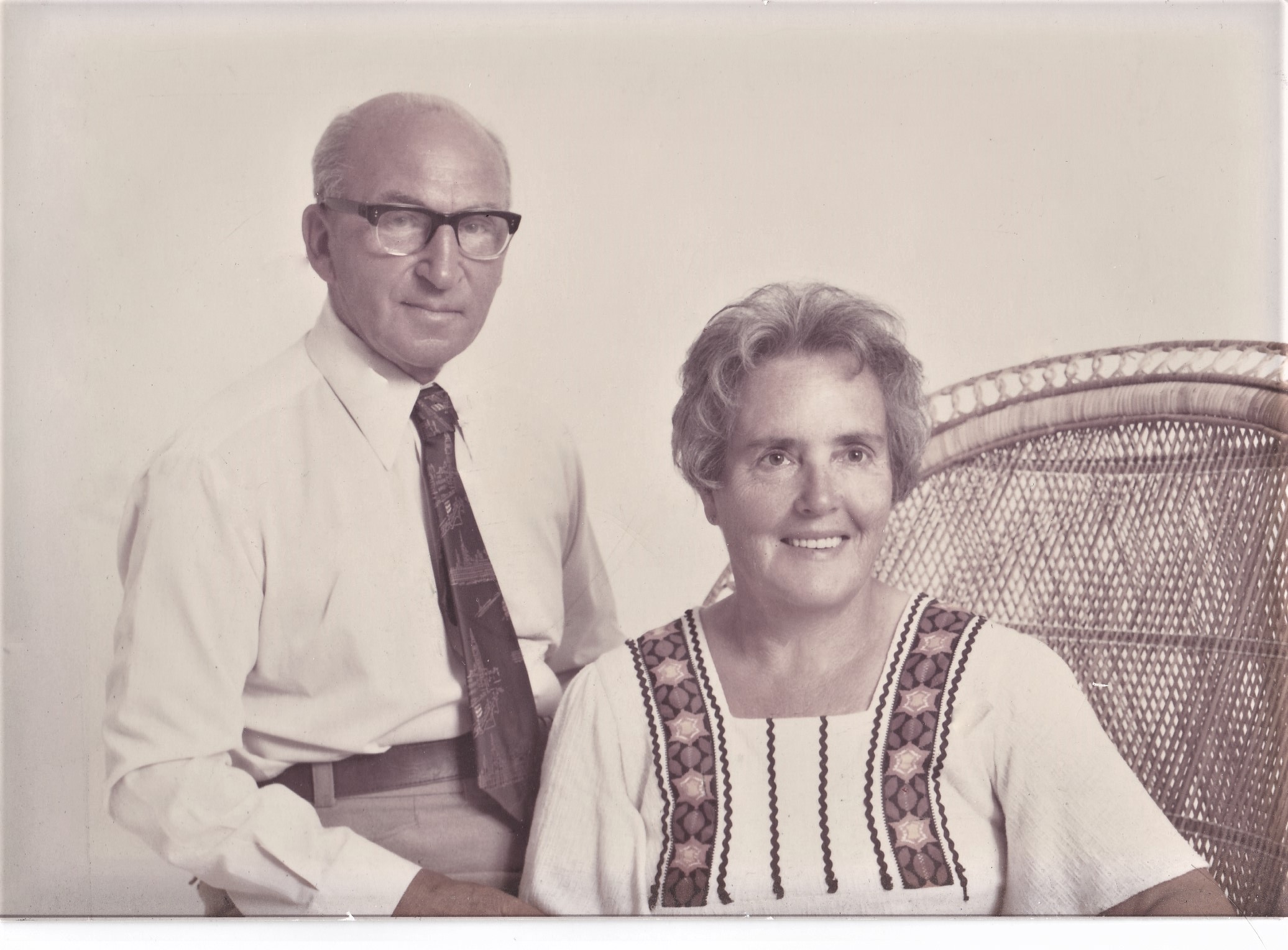
While scheduling this post for publication I noticed that the day I chose – Wednesday – will be April 1st. This just happens to be my parents’ wedding anniversary. Coincidence? Perhaps not. I honour their marriage, I thank God for them, and I thank them for their love and example, and for giving me life.
What makes a couple drift apart as they get older? It isn’t mandatory, it isn’t prescribed and it isn’t unavoidable, but it happens commonly. To be sure, the diminishing and finally the complete loss of physical attraction are contributing factors which eventually and inexorably reveal the true character of each member and of the relationship.
My parents were good people. In fact, they were outstanding, and were I to write about their acts of kindness, their selflessness, their dedication, their hard work and even their treasures of wisdom, I could write a long book. However, what I saw between them increasingly as time went on was a severe lack of communication, and when there was any, it was on a very shallow level. One half was not only unable to understand the other or to empathize but seemed to make little attempt to do so. How can this be, in a relationship which has existed for several decades? How can people not be interested in each other, when they’ve spent their lives together and when their interests are so entwined that they could not possibly part voluntarily?
Being a man as I am my understanding of dad’s part in the disintegration is limited. I certainly wouldn’t say he was innocent in the matter, but he was an honorable man in every way, as most people who knew him would have attested. Any romantic interest shown by another woman would have been swept away with holy zeal. The degree of his faithfulness to God, his wife, his church and his family was probably as high as is humanly possible, and as high as I’ve seen in any man or woman. He was never disrespectful to my mother, and he literally wouldn’t hurt a fly let alone his own wife. He had a deep regard for her and was immeasurably patient. He was truly an upright man, and I thank the Lord that I had such a Father. I look forward with passion to seeing him again.
However, he was an insensitive person to a great extent, being so wrapped in his own tasks and pursuits that he didn’t notice how others felt or how he sometimes blundered through daily life. Perhaps in some ways this was his strength: he was able to power through obstacles, setbacks and discouragements like a highly trained soldier, or like an expertly built icebreaker at the north pole. His insensitivity was not intentional. He didn’t neglect my mum’s feelings because he was uncaring or selfish but because he just didn’t think of it. Additionally, it was a British trait of the time to bury your feelings and ignore those of other people as a weakness. You just didn’t show your feelings or discuss them, because it would be almost like revealing your underwear or your bank account details. Feelings were pushed and shoved down to the depths of the soul. My dad’s mind was so busy and full, balancing all of his duties, challenges, passions and interests that he just didn’t find time for feelings – not his wife’s, not his children’s and not his own.

Being a man, I was far more able to observe my mum’s shortcomings. Oh, she was an incredible woman. She was strong in every way. She had five children and three miscarriages. She battled several serious illnesses and one near-complete electrocution. She raised difficult kids while my dad did the manly thing of the time and worked his days away, only to spend the bulk of his spare time serving in the church as a musician and band leader. My mum kept the house clean and the family fed at a time when there were few aids available to the average housewife. I remember seeing her sweeping the stairs on her knees with a hand-brush, one by one, until she got to the bottom. Many times I saw her hang out a full basket of clean laundry to dry in the garden, only to quickly pull it all in again when the English rain fell five minutes later. She was a powerhouse, and only succumbed to death at the age of 96 when she received some “help” (not from me).
How can I say anything negative about my mother when she gave her life for her family? I write this in love, not in anger or bitterness. It’s my observation that women develop a contempt for their men – sometimes early on – which manifests more and more until there’s no attempt to hide it. In truth my mother was a bully towards dad. Perhaps strong people can’t help being bullies – it’s the only way they know how to keep going through all the challenges. She resented dad’s passion for life while she held up the home and dealt with the troubles her kids caused. She’d been raised in a home of relative poverty. Having lost her mother to Tuberculosis at the age of six, she then witnessed her father leave her and her two siblings to work on ocean liners and never come back. Mum went into “service” in her early teens and worked forevermore.
She was a soft woman on the inside, but towards my dad and often to her children she was as hard as nails. Any hint of emotion I witnessed over the years, including laughter, was restrained as much as possible. In respect to my parent’s marriage, there’s no doubt in my mind that had mum been able to show some affection, physically or at least verbally, she would have won the day hands down, and dad would have practically worshipped her. But she couldn’t, and not surprisingly, since she wasn’t shown any love or affection by the family which had raised her. Again, demonstrations of affection were just not British in the early and mid-twentieth century. How people had babies I’m not sure, but the act of procreation likely bypassed most verbal and physical expressions of simple affection. My mum’s love was shown to her family in scrubbing floors and endlessly cooking meals from scratch (which were amazing). It was demonstrated in nagging, mending, shopping and sitting at home alone while my dad worked nights because it paid more money.
I did see my dad often attempt to put his arms around mum and try give her a kiss, even when they were in their sixties and seventies. He would publicly tell her she was “beautiful”, but his advances were, without fail, literally pushed away. His bad breath probably didn’t help. The bottom line is this: Had she the extra strength to reach out to my dad with warm hands and kind words, his heart, which so longed for love and affection, would have melted from utter fullness and joy. World War III would have ended and never come back.
Among the many reasons couples drift apart emotionally is that we all tend to defend ourselves against perceived wrongs. We stop loving unconditionally, if we ever did, and decide that it’s time to take care of ourselves. Communication and a repentant heart are the keys to success: love cannot operate without them. The physical and the verbal are equally important, since God made us as both spiritual and physical beings. How close we are to having a wonderful world to live in, yet so far away because of our pride, our prejudices, our selfishness and our unwillingness to give people exactly what they want, rather than what we think they should want.
 Fuel for Faith, Food for Thought