
Many people, and particularly those of the atheistic persuasion, insist that Christians are living and operating on blind faith. We depend on superstition; we wallow in ignorance; we haven’t evolved our brains to the next level yet as they clearly have, and we ignore science and reason because we’re afraid to die, and in order to have meaning in our lives. Are they correct?

In answer to these accusations, I would first say that if I had only imagination, stories and myths with which to perpetuate my faith and hope, I would give it up immediately. I never was one for faking or falseness: I want reality, no matter how uncomfortable.
At the same time, there is a place for blind faith: for hoping in that which is not yet seen. I accept gladly many things which have not yet been confirmed to me. Of course, I have never been to heaven, and I don’t believe those who say they have. However, I freely embrace the fact that there is such a place, and that I am going there, based on what I do know for sure, and on things I have been told and which I have concluded by my own reckoning and experience.

THANK GOD
I do not believe blindly because I’m easily led, or because I’m superstitious, or because my religion gives me a thrill or a fuzzy feeling. I must, however, at the outset state that I did not come to faith initially by my own power of reason or intelligence: I came to faith because I responded to the call of my God. He gets the glory for my coming to the light, though it did make eminent sense at the time. Subsequently, I and my God have built reason upon HIs foundation.
God draws all people, including you, by revealing something of Himself to them, but not everyone responds. When evidence is present for a creator (that is, all the time) many people will choose to ignore it. Others such as myself, when presented with something which on the surface speaks against the existence of God, will choose to look for a way around or through that problem, because yes, we do want to have faith even when it seems apparently unsupportable. The unbeliever chooses to harden his heart, and the true believer humbles himself and perseveres. By persevering, we can-by faith-find our way to the truth.
WHY I AM A CHRISTIAN
Some time ago I wrote an article titled, “Why I am A Christian”, in which I laid out my own reasoning for faith. Here are the main points of my article, summarized briefly. For a fuller version, see the link at the bottom.
ORIGINS
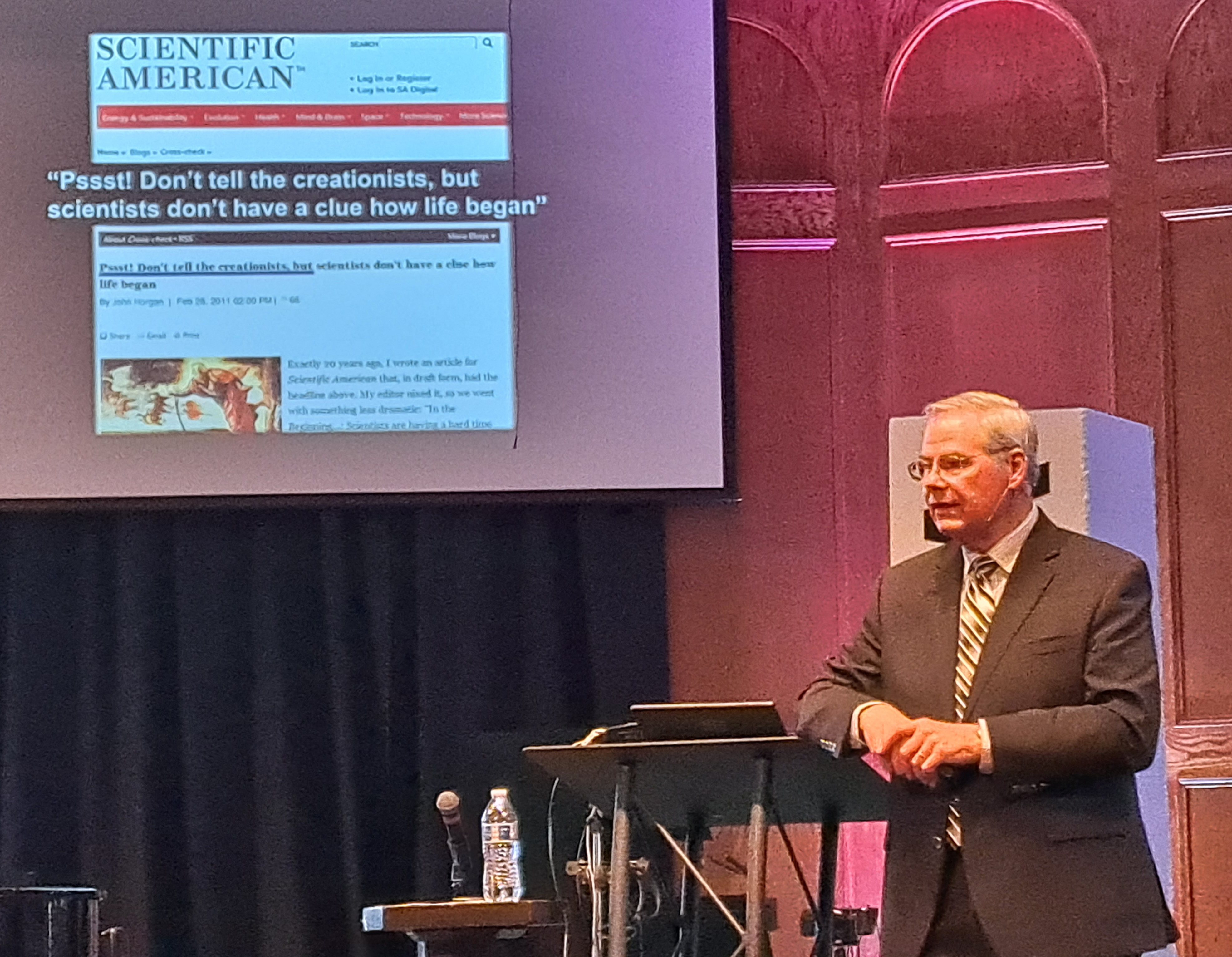
The subject of origins is hugely significant. Scientists do not know how life formed from non-life, or even how non-life came into being. They can make a few organic chemicals (by design) but are clueless about how the incredible complexity of life came about. This is enough evidence alone that something…someone far greater is at work.
I have seen no evidence for macro-evolution, and neither have you. A few bones or fossils arranged in a museum is no substitute for the evidence which should be on display if the theory of evolution were true. The theory is constantly changing: truth does not. Bacteria altering or adapting is no evidence at all: it remains bacteria and does not become something else. The story of human evolution is just that-a story.
THE CREATION
The lack of evidence for evolution speaks of a Creator: there is no sensible third option. So who is this creator? What is He or she or it like? The evidence for that is seen in creation. An artist or a designer will always show something of himself in what he creates or designs, and in nature-in our cosmos and our world-we see indescribable power, beauty, intelligence, and aesthetic sense. No matter how far astronomers look into space, there is always more to see. The BIblical God is infinite, and only an infinite being could create what appears to be almost infinite.

UNITY AND ORDER
How many creators are there? Look at the confusion and disarray of government, and you will see that there cannot be a multitude of differing creators with differing ideas. There can only be one supreme being. Who is that being?
THE CLAIM
The Bible claims over and over to be the inspired word of the creator. It describes that creator in many ways, and His description matches what we see in creation. For just one example, it declares that the physical universe had a beginning. This idea was not acceptable to humanity until the twentieth century, when scientists decided there had to have been a beginning, but promptly set out to manufacture a godless explanation for that beginning.
SUFFERING AND DEATH EXPLAINED
If you are one who thinks that the existence of God is disproved by suffering, you haven’t really read the Bible. Scripture lays out the problem and the cause of suffering in our world, and gives the cure..
SOLID TESTIMONY
The Bible contains a narrative spanning all of the history of the earth, from creation to conclusion. Its account is supported by honest archaeology, history and science. Unbelievers sometimes pose as Biblical archaeologists or historians-others who really do believe have presented abundant evidence to assure the Christian that what is in the creator’s message can be confidently believed.

MANY BOOKS, ONE STORY
The narrative also includes the story of a savior: his genealogical line, the history of that line and the people around it, his purpose, his appearance in history, his mission, and his teachings. His life, works and words were recorded and passed on by eye-witnesses. Their message and their news has come down to us. It is to an extent supported by what has been found under the ground and in caves. Their writings have been copied down through the ages, and contrary to common accusations from unbelievers, what we have in Scripture now can be very favorably compared to ancient manuscripts.
The people and places they wrote of really did exist, and are often found despite the claims of dissenters that they never existed. Their story is all the more believable when you consider that while many people will die for their religion, believing that what they are dying for is true, the apostles would not have died for what they knew was not true. Being eye witnesses, they gave their lives to spread the message that Jesus told them to spread.
HUMAN NATURE
Human nature is, I am convinced, most impressively defined and described in the Bible. The condition of our relationships, our cultures and our world is explained well in the Bible. Our faults and failings are best explained there, and a perfect and satisfactory cure is also found there. We find, by comparing Scripture and the ways of God with the ways of humanity, that our God is right about so many things. His way of doing things works: our own often does not.

OUR LOVE OF LOVE AND JUSTICE
Most of us love the concept of justice. We believe in right and wrong, and we want to live in a just world. Where does that sense come from? If we were just another animal, we wouldn’t care: we would be entirely self-serving. But Scripture declares that we were created in the image of God, who is Justice himself.
The same can be said for love. Most of us want to love and to be loved in its many forms. Again, this concept comes from our creator who is, as the Bible declares, Love.
BEAUTY APPARENT IN THE BOOK
The writings of Biblical Scripture are of no ordinary literary quality: they are exceptional. They satisfy for me the claim that they are inspired by the same Person who designed our cosmos. Yes, they are “warts and all” accounts of a period of human history, which further confirms for me that they are not cobbled by a human desire to fool countless successive generations. The Bible is not just one book-it is a collection of books written over many centuries, by many different authors, which all fit together to tell one story.
EXPERIENCE
Finally, I can tell of personal experience. I have seen the power of God at work in my life. Once I was blind, but now I see, and while I still have faults and failings, I know for sure that my God has been working to change me, to provide for me, to forgive me, to love me, and to guide me.
I don’t just hope, or think: I know that my redeemer lives.
Hands-over-face image by Hayley Murray on Unsplash
 Fuel for Faith, Food for Thought
i’ve never liked the term Blind Faith. It’s so loaded of a term designed to put the believer on his back foot from the start. we Believe. we have Faith. for various reasons and purposes. but to begin a conversation or discussion about our Faith or Belief by couching it.. even provisionally.. as “Blind” is to poison the well of Good Will from the start.
LikeLike
Right, it’s intended as an insult. Thanks for commenting
LikeLiked by 1 person