
We Christians aren’t dependent on physical evidence to support our faith, but when it comes along, as it does regularly, it’s thrilling and welcome. The Shroud of Turin has been commonly ignored in the protestant world since it first began to make news. I confess to being one of those who didn’t even bother to look into the claims of its origin. I’ve never been one for relics, ceremony, rituals or buildings, and when I heard that the shroud’s authenticity had been all but debunked by radiocarbon-dating I was turned off it altogether… until recently. Now, I see myself as a believer in the shroud, with slight reservations.
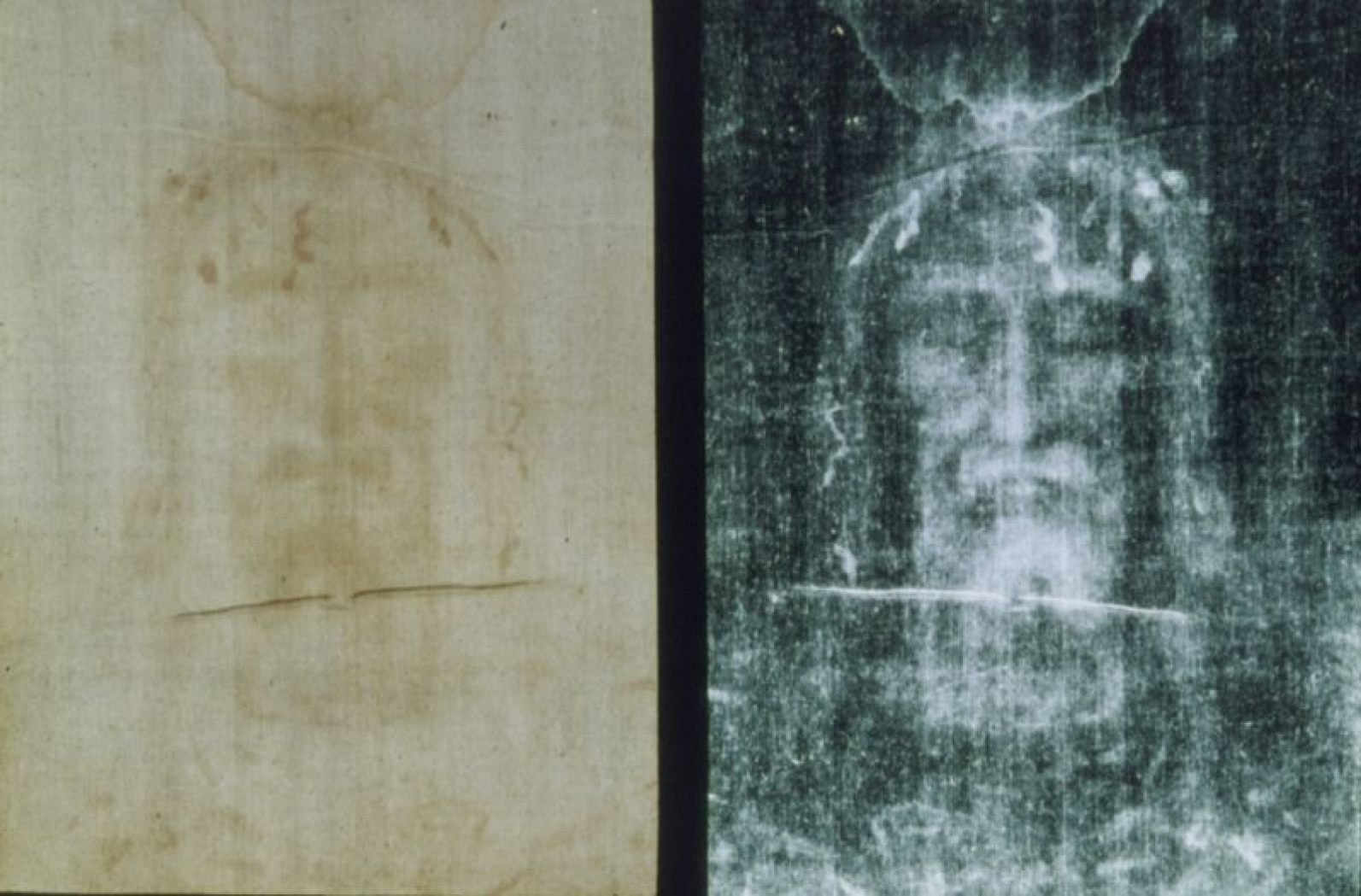
This article is a simple summary of a video presentation from the Associates for Biblical Research, and “Digging for Truth”, a regular podcast on archaeological finds and studies relating to the Bible. I’ve also inserted one or two observations from other videos on the subject. I’ve listened to one or two skeptics on the matter: host Dr. Smith and his guest are firm believers in Biblical Scripture and in the only Son of God, Jesus Christ. Find a link to the video below. Please forgive me for any ugly ads or gaps in the post added by WordPress.
FROM SKEPTIC TO BELIEVER
Dr Smith’s guest, Dr. Jeremiah J. Johnston, is a New Testament scholar, professor, apologist, and regular speaker on university campuses, churches, and conferences. He completed his doctoral residency at Oxford, UK, and received his Ph.D. from Middlesex University (United Kingdom), with commendation. He has Masters Degrees from Acadia University (Canada) and Midwestern Baptist Theological Seminary (US).
Johnston was a shroud skeptic until his pastor, Jack Graham, challenged him to look into the evidence for himself. Now Johnston proudly and loudly asserts it’s a “slam dunk” that the shroud is the burial cloth of Jesus Christ.
THE FIRST SELFIE
“Did Jesus take the first selfie?” The image upon the ancient cloth, when viewed as a photographic negative, clearly shows a crucified man, “at the molecular level”. The image is such that AI can and has produced a compelling picture of what the crucified man had looked like in life.
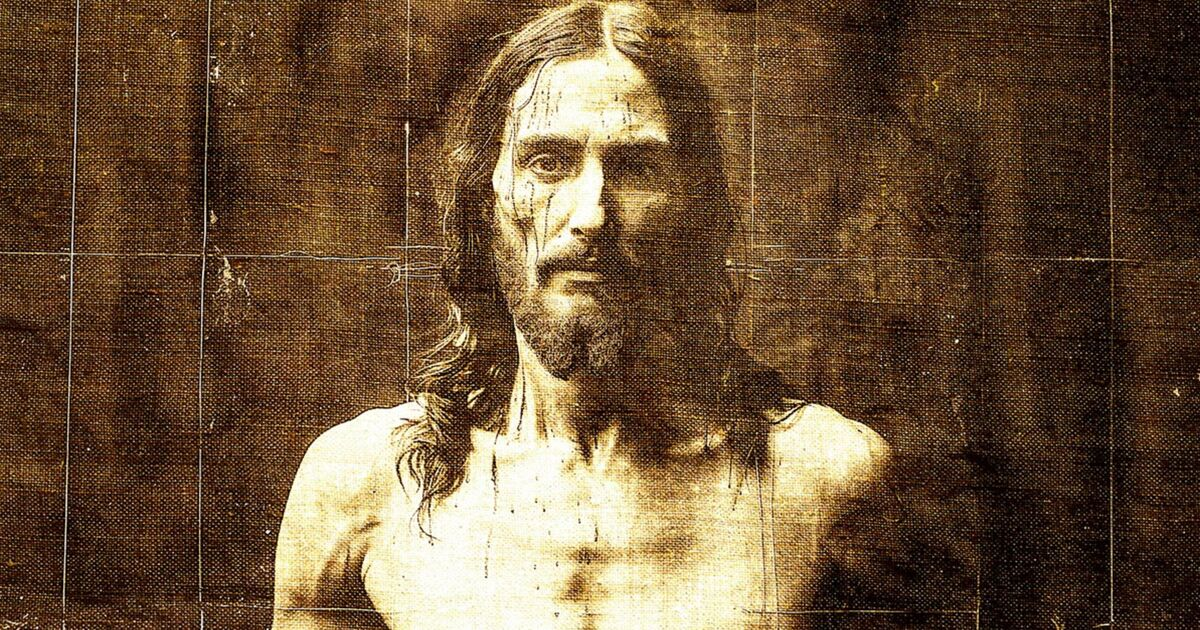
What I like about this image is that the man has no apparent vanity or falseness. He isn’t acting, he isn’t posing, he isn’t “cute” and he isn’t a body-builder. In my image of Jesus, all these things are pluses.
THE MOST STUDIED ARTEFACT
Johnston tells us that the Turin Shroud is the most studied archaeological artifact in the world, and it isn’t just “religious” people or those who may be accused of bias who have done the studying. Serious secular scientists, scholars and medical experts have been at the forefront of the analysis for decades. In 1978 fifty scientists from many different backgrounds came together to study the cloth in Italy. They had 60 hours to do their work. Before they saw it up close they were skeptical, and lightly mocked the claims that it had wrapped the body of Jesus Christ. Once the study was done, says Johnston, the researchers unanimously admitted that it was not a hoax. It had not been fabricated to fool anyone. The sniggering had ceased.
THE IMPOSSIBLE IMAGE
How did an image of a crucified man get onto the cloth? Scientific studies have shown that no pigment, paint or dye was used. Scientists – the best – cannot explain how there is a molecular image embedded in the shroud. It’s as if a blast of radiation created it, and significantly, the “radiation” came from the inside out.
NOT JUST ANOTHER RELIC
Again, it has been a common mistake among protestants to think that the shroud is just another Catholic relic, in the class of those which always produce a yawn and a raised eyebrow. The truth is that this artefact has only been in the hands of the Catholic church since 1988. Before that it was privately owned. Hundreds of burial shrouds have been discovered over the years, the oldest being Egyptian. However, only one has an unexplainable image on it. More than that, many details of the image match the Biblical record of Christ’s death… and resurrection.
There’s a lot of blood on the cloth – “pints and pints”, says Johnston. The image is only a few fibres thick, and was produced after the blood. Even 40 years on, scientists cannot figure out how the image got there. One man in Britain has offered a million dollars to anyone who can duplicate the effect, and as yet no-one has claimed the prize.
CLOTH OR CLOTHS?
The Sanhedrin were responsible for the burial of those they had condemned to death. Scripture speaks of the shroud. Joseph of Arimathea, who was a disciple of Jesus, “but secretly for fear of the Jews”, and Nicodemus:
“… took the body of Jesus and bound it in linen cloths with the spices, as is the burial custom of the Jews” (John 19:38-40 ESV).
One of my own reasons for once giving the shroud no credence was that some Bible versions describe Jesus being wrapped in “cloths” plural, or in “linen strips”, and not a single shroud. Matthew’s account of the burial describes a single cloth:
“Joseph took the body, wrapped it in a clean linen cloth…” (Matthew 27:59),
John’s gospel speaks of not only strips of linen but a separate headpiece. What are we to think? Gary Habermas has covered this matter convincingly in his own commentaries on the subject. For me the whole problem is solved by envisioning both strips of linen but a one-piece cloth covering all. Perhaps the cloth which Joseph wrapped the body with initially after the crucifixion was laid on top of the dressed body, so that both strips and an over-all shroud were used.

FIRE AND POLLEN
The shroud was damaged in the middle-ages on more than one occasion by fire, and had been doused. However, the image wasn’t destroyed by fire, smoke or water. For five years one man studied pollen found on the shroud. The only pollen spores on it are from the land of Israel.
FAULTY C14 DATING
Carbon 14 dating was carried out in 1988 in three different labs on a sample of the shroud. The test expressed a date of only 700 years, and a declaration was made that the shroud did not date back to the time of Jesus. Many people felt deflated by the news. However, it’s now known that The British Museum suppressed information for 25 years which showed that the sample had come from a patch added to the cloth in the Middle-Ages. It took a French attorney to get access to the raw data. This data revealed that the weave of the piece of cloth sampled – the patch – is different to the weave of the cloth as a whole. Not only this, but it’s likely that smoke and other contaminates from the fires the cloth suffered would give an erroneous date. Johnston and Smith ask why the British Museum would suppress the data. The C14 data, says Dr. Johnston, has been shown to be “totally inauthentic”.
THE LATEST SCIENTIFIC DATE
Have there been any new attempts to test the age of the cloth with Radiocarbon dating technology? Apparently the pope, who has the necessary say-so, first has to be convinced to allow a further cutting of the cloth. However, confusion caused by the faulty Carbon 14 dating has recently been eclipsed by an alternative dating technique. In 2024 Wide Angle X-Ray Imaging was carried out on the cloth. A study published by The Heritage Journal – not a Christian publication – has now dated the shroud to 2000 years ago: the time of Jesus Christ. The form and the decay of the shroud’s genuine sample matches that of cloth found from the Jewish fortress of Masada in AD 66-70.
THREE-DIMENSIONAL IMAGE
Three-D imaging of the shroud has demonstrated that the image is three-dimensional. If it had been painted onto the cloth the image would be flat. A VP-8 image analyzer shows that the image has a three-dimensional topographic quality. This is consistent with the idea that “radiation” of some kind come out from the body through the cloth.
THE SHROUD’S TESTIMONY
Many intricate details can be seen in the image. For example the legs are not broken. It was normal in Roman crucifixion to break the legs of the victims to ensure they were dead. In the case of Jesus, they did not:
“Because the Jewish leaders did not want the bodies left on the crosses during the Sabbath, they asked Pilate to have the legs broken and the bodies taken down. The soldiers therefore came and broke the legs of the first man who had been crucified with Jesus, and then those of the other. But when they came to Jesus and found that he was already dead, they did not break his legs” (John 19:31-33).
John went on to relate the fact that an Old Testament prophecy had predicted this fact:
These things happened so that the scripture would be fulfilled: “Not one of his bones will be broken” (John 19:36).
Jesus Christ was scourged (John 19:1 KJV). Johnston has counted 120 scourge laceration marks in the image – giving a total of 700 wounds on the body.
THE SPEAR IN JESUS’ SIDE
The image shows a lance wound on the left side of the body, close to the man’s heart. John records that instead of breaking Jesus’ legs to make sure he was dead, one soldier jabbed him with his spear:
“The soldiers therefore came and broke the legs of the first man who had been crucified with Jesus, and then those of the other. But when they came to Jesus and found that he was already dead, they did not break his legs. Instead, one of the soldiers pierced Jesus’ side with a spear, bringing a sudden flow of blood and water. The man who saw it has given testimony, and his testimony is true” (John 19:32-35).
There are many pints of blood on the cloth, says Dr. Johnston. Paul regularly noted how Jesus bled for us:
In him we have redemption through his blood, the forgiveness of sins, in accordance with the riches of God’s grace (Ephesians 1:7).
The blood has not turned black as blood will normally do: it is more red. A haematological study has shown that in extreme trauma the kidney will secrete a chemical which prevents the blood from turning red. The blood is known to be of a rare type.
The head has many wounds consistent with the crown of thorns on Jesus’ head. His nose is broken – the ligament had to be off centre – from blows to the man’s face:
They blindfolded him and demanded, “Prophesy! Who hit you?” (Luke 22:64).
CONCLUSION
This post and the video I’ve reviewed is a summary only of some of the information from the Shroud of Turin. There is far more detail to learn about. The shroud has been studied for decades. Make up your own mind whether it’s genuine. Either way, Jesus Christ died on a cross for your sin: all of it. After three days he rose from the dead, because death had no power over him. If we associate ourselves with Christ, and believe the good news of his death and resurrection, death will have no ultimate power over us:
“But God raised him from the dead, freeing him from the agony of death, because it was impossible for death to keep its hold on him” (Acts 2:24).
The resurrection of Jesus seems to be attested to and recorded by the Shroud of Turin, in an image impossible to explain even by the best scientists of our day. However, even if it is a mistake or a fake, Jesus Christ is still the resurrected Lord of life.
There is a buised cheek and shoulder on the same side. Crucifiction victims had to carry their own cross. Jesus tried but could not. These abrasions are consistent with these wounds.
Further studies on the blood are consistent with the trauma Jesus suffered.
The forehead has a wound.
Outlines of flowers have been found on the cloth -Anthemis aka Chamomile, the flowers being consistent with plant life in the land of Israel. As he notes, if we in Europe were creating a hoax in the middle ages such things would not be taken into account
Impression of coins on the eyes-the coins have been shown to be those in circulation in Israel in the first century.
There is evidence of the nails, which were driven thhrough the writs (hands) and also nails through the feet.
Jesus of Nazereth gave his life to pay the price of our sins so that we can be forgiven and go to heaven and be with him.
THE VIDEO:
 Fuel for Faith, Food for Thought