
Has anyone not been asked the following rhetorical question: “How do you know your God is the right one?” In my experience this question – posed more as an accusation – is directed at Christians and never Muslims or Hindus or people of other faiths. They are considered to be sincerely seeking while we followers of Christ are not. It is perhaps a “Western” question, or should I say an anti-West question. Were it really asked as a question and not as a verbal attack, it would be a pretty good one, and valid. Christians are indeed to be ready to give every man and woman an answer for the hope that is in us: that’s fair and reasonable.

Fundamentally however, we really don’t have to have an answer if we’re unable. There’s no minimum IQ requirement to enter the kingdom of heaven, and while on the subject, I would like to point out the fact that many professing atheists and agnostics on the street barely graduated from high school, if at all. Intelligence levels don’t prove whether or not a person’s convictions are objectively true, and God does not demand university level answers to difficult questions. In fact, Jesus made this prayer:
“I praise you, Father, Lord of heaven and earth, because you have hidden these things from the wise and learned, and revealed them to little children” (Matthew 11:25).
Worldly wisdom does not impress our God at all. He’s looking for humility, not intelligence, knowledge or credentials. If you don’t know the answer to a difficult question, particularly if it’s intended to trip you up and make you look foolish, that’s fine: you don’t have to know it. Truth doesn’t go away or get disproved just because you don’t understand it or aren’t aware of it. You don’t have to know the facts in order for something to be true. Relax!

Here’s a good and simple response to the challenge, “How do you know your God is the true God or the only God?”:
“I love Jesus Christ. I love what he said and what he did. I love that he died for my sins, and the message that he rose again and offers me eternal life in reply to my repentance and love for him. The gospel gives me happiness and peace, hope and faith, direction and meaning, and it’s changed my life for the better”.
This, of course isn’t going to satisfy the skeptic or the hardened atheist or the one determined to make you look or feel stupid. He wants hard evidence… or so he says. In truth, no-one can produce and parade the pierced body of Jesus Christ – and that’s part of the argument in our defence. There is, however, plenty of other evidence that what we read in our Scriptures is to be trusted and believed. As an example, many characters, places and events we read about in those pages are now known to have been as real as you or I. You could study these things and your faith would be strengthened greatly. We also have an argument and an apologetic as logical and rigorous as it needs to be. The Christian life makes perfect sense when lived according to the words of our God.
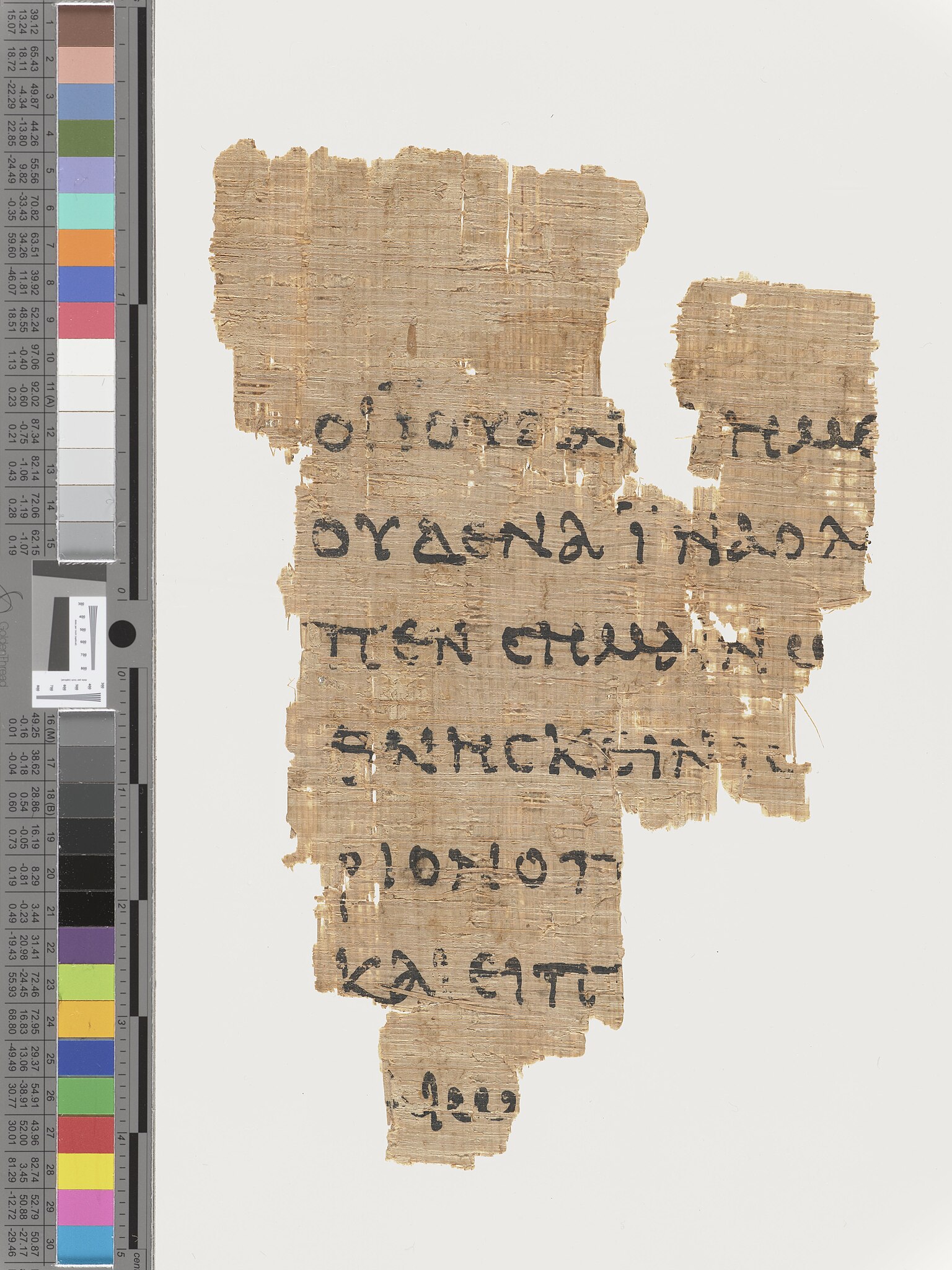
Even if you were to direct the skeptic to hard evidence for the life and times of Jesus, the chances are that he would reject it (but don’t let that deter you). How do I know? Partly because I’ve done just that and found that people are not interested in knowing Jesus Christ or the truths of Scripture, and partly because of the many men and women who saw the works of Christ actually performed in front of their eyes, a large number wanted him dead and out of the way. Faith doesn’t come from being convinced by abundant hard and irrefutable evidence (although it can help). It’s about what we love and what we reject. We have faith because we love and believe what Jesus said, did and is.
Those who shouted “crucify him” were not interested in Jesus’ claim of divinity, or in his testimony that the Father had sent him, or in his promises of eternal life. They just didn’t want to know, even with the supporting evidence being in their faces. How many people will respond to your witness with the sincere response, “Please tell me more – I would love to know how the son of God wants to give me eternal life with the creator of the universe. I’ll weigh up what you have to say and consider it deeply”. Instead what you will get, at least in the West and 95% of the time, will be a sneer and a snub such as the one I opened with, and perhaps a couple of four-letter words thrown in. It’s like someone walking up to a man in the street and trying to hand him a million dollars, and him walking away without waiting to see if the offer is genuine.
In a world and a time where there is a multitude and a plethora of ideas, beliefs, philosophies and theories, it seems on a shallow level that it should be impossible to know what’s true and what is not. That’s perhaps part of the reason for our post-modern culture in which humanity is totally blase about the concept of absolute truth or is even hostile to it, and refuses to seek it.
The arguments for syncretism or universalism are paper-thin when you really think about it. All roads cannot lead to the same destination. No-one can even agree on what the destination is. Ask the dedicated Muslim if he can accept Jesus Christ as Lord and savior and he will tell you that God does not have a son, and anyone who believes he does is an infidel. Tell a Hindu that humans are appointed to die once and then the judgment will come and they will insist that no, they are going to be perfected through numerous or perhaps thousands of rebirths.

If (or since) there is a God, he or she or it must have specific characteristics. Just as one person cannot naturally have blond hair, black hair, red hair and gray hair at the same time, so a real divine being cannot be all things humanity can imagine, complete with all those contradictory characteristics. Not everyone’s god can be the right one. And if (or since) the real God has revealed himself to mankind, it’s incumbent on us to find out what he is really like, and what he requires.
The faiths and philosophies of the world cannot fit together any more than oil and water can blend, or any more than a square peg can go into a round hole. The religions of the world are in such opposition to each other that you would have to deny the central tenets of all of them in order to bring about any kind of unity, and then you would have stripped all meaning from them, and you would have totally changed the character of all their alleged gods. If one of those gods were the real one, you would be throwing the baby out with the bathwater.
If there is one God, and in order for him to be God and not a vassal, he or she or it must be supreme above all… rather like – or exactly like – the God of the Bible. If there were a pantheon of different gods with different personalities they would live in bedlam and discord, such as the Greek divinities on Mt Olympus did. Alternatively, a group of divine personalities who were of the same mind in a loving and unbreakable unity could work well… rather like, or exactly like, the Biblical trinity of Father, Son and Spirit.
Until now I’ve never really paid a lot of attention to one phrase of Jesus’ about sheep, sheep being a metaphor for his human followers. He of course is the shepherd of the sheep, as he stated plainly. This phrase is passed over too easily:
My sheep listen to my voice; I know them, and they follow me. I give them eternal life, and they shall never perish; no one will snatch them out of my hand (John 10:27-28).
Among all the voices and claims and ideas and philosophies of the world, millions manage to follow the voice of the one they love – Jesus Christ. “No one will snatch them out of my hand”, he said. No amount of confusion and false philosophy will deter or defeat the true believer; the elect of God.
One video I found on YouTube graphically demonstrates the fact that sheep will respond to their shepherd. The producer writes in comment, “Sheep can distinguish the voice of their herder. Shepherds often use specific calls or whistles to communicate with their sheep. Over time, the sheep learn to associate the herder’s unique vocal cues with safety and guidance” *
So it is with the followers of Jesus Christ. We follow and respond to the voice of the one we love. His Spirit is in our hearts. His words and works are recorded in our Bible. The revelation of God’s message to us is complete there, and when we hear another shepherd attempting to lead us away, perhaps in later claimed revelation or prophecy, the true children of God don’t follow, because the voice is not that of our lord and master.
Those who do follow the commands of others probably never were sheep belonging to the true shepherd. When we hear a command that’s not from our shepherd we don’t obey it. Among the confusion of commands, encouragements and directions which are coming at us from all directions, if we are really followers of Christ, we will only go in the way He leads. We will know truth from error, and we will distinguish between the true shepherd and the charlatan.
*Sheep know their shepherd! by pijnacker01
 Fuel for Faith, Food for Thought