
From my earliest days as a Christian I’ve seen and heard confusing and conflicting things being preached on the subject of the Holy Spirit’s work and ministry. I’ve witnessed others being in similar confusion and doubt. I found myself being discriminated against and looked down upon in the Church because I didn’t have this and I couldn’t do that. I was a second-class Christian at best in the eyes of the enlightened, “super-spiritual” ones, particularly the ones who had decided that they were apostles. I soon grew tired of the class structure in my circle of worship, and I knew this wasn’t the Spirit of the God I had believed in, so I set out to discover the truth by examining the word of God closely. I hope and believe that what I discovered will help you.

WHO HAS THE HOLY SPIRIT?
Who has the Holy Spirit? Do we have to try to get Him? Do we need a powerful minister to give Him to us? Do we need ambient music and tearful worship before He will come? And if we do have Him, do we still need to seek a second blessing? Are people who have had the second blessing more powerful than those who haven’t? Are people without the Spirit or who haven’t had the second blessing powerless as witnesses for Jesus and powerless against sin? How can we become powerful and pleasing to God? Do we really have to try to prove how spiritual we are by practising charismatic gifts?
A DISCLAIMER
This is a long post! Feel free to scroll to sub-headings, but you might miss something important! Forgive me for any ugly ads or gaps inserted by WordPress.
THE SPIRIT OF GOD: THE DIVIDING LINE BETWEEN THE SAINTS AND THE AINTS!
Fortunately, Paul hasn’t left us in the dark about these matters. The truth is out there, or rather in there… in the pages of Scripture. In his letter to the Romans Paul makes a clear dividing line between those who have the Spirit of God and those who don’t:
Those who live according to the flesh have their minds set on what the flesh desires; but those who live in accordance with the Spirit have their minds set on what the Spirit desires. The mind governed by the flesh is death, but the mind governed by the Spirit is life and peace. The mind governed by the flesh is hostile to God; it does not submit to God’s law, nor can it do so. Those who are in the realm of the flesh cannot please God (Romans 8:5-8).
Paul lays out an “either-or” scenario here. Either a person is led by the Holy Spirit and is able to please God in the way he lives, or he is not led by the Spirit, and he is walking in the flesh. Some have taken this truth and twisted it to say what it doesn’t say. However, Paul doesn’t leave us hanging. He clarifies the issue for us:
You, however, are not in the flesh but in the Spirit, if in fact the Spirit of God dwells in you. Anyone who does not have the Spirit of Christ does not belong to him (Romans 8:9 ESV).
If the Spirit of God is in you, you will live in the Spirit. However if you don’t, you’re not a Christian at all, according to the second part of the verse:
“And if anyone does not have the Spirit of Christ, they do not belong to Christ“.

The Spirit of Christ is not a different Spirit to the Spirit who we are talking of. There is only one Spirit:
There is one body and one Spirit, just as you were called to one hope when you were called (Ephesians 4:4).
HOW TO BELONG TO CHRIST
Does this insistence of Paul’s that we must have the Holy Spirit mean we have to seek to receive the Holy Spirit in order to be saved? Do we have to find a “powerful” minister to lay his hands on us and speak in tongues so that we can receive the Spirit and be saved? No, it doesn’t mean that, and Paul’s first-century gospel – the one he preached around the known world and outlined in the first seven verses of 1 Corinthians chapter 15, does not include seeking to receive the Spirit. Instead the Spirit is all packaged in with receiving Jesus Christ.
‘Moreover, brethren, I declare to you the gospel which I preached to you, which also you received and in which you stand, by which also you are saved, if you hold fast that word which I preached to you—unless you believed in vain. For I delivered to you first of all that which I also received: that Christ died for our sins according to the Scriptures, and that He was buried, and that He rose again the third day according to the Scriptures“(1 Corinthians 15:1-7 NKJV)
Paul laid out the gospel for the Romans. Notice that there’s no mention of the need to seek the Holy Spirit in order to be saved:
“If you declare with your mouth, “Jesus is Lord,” and believe in your heart that God raised him from the dead, you will be saved. For it is with your heart that you believe and are justified, and it is with your mouth that you profess your faith and are saved” (Romans 10:8-10).
Here’s Jesus defining salvation:
“…the one who hears My word, and believes Him who sent Me, has eternal life, and does not come into judgment, but has passed out of death into life” (John 5:24 NASB).
EVERY BELIEVER HAS THE HOLY SPIRIT
Going back to our first verses, anyone without the Spirit does not belong to Jesus Christ, says Paul. Logically then, if you belong to Jesus through your faith in the gospel as outlined above, you have the Holy Spirit. This was the teaching of the apostles from the establishment of the Church, once Gentiles, Jews and those who had been led by the teaching of John the Baptist were brought into the fold. I will show below that the Holy Spirit in the believer is vital for such things as sanctification and resurrection. You cannot be a believer in Jesus and not have the Holy Spirit.

DO WE NEED A SECOND BLESSING IN ORDER TO GAIN POWER?
According to some in the Church, just having the Holy Spirit doesn’t mean much: you’re still a second class Christian, powerless and without influence with the Lord or any matter of the Spirit. I’ve seen such claims in the statements of faith in one or two major denominations. Passages of Acts are used to defend this position. However, others are ignored.
PAST AND PRESENT
Old Testament empowerment of the Spirit was temporary, which is why David wrote, “Do not take your Spirit from me” (see Psalm 51:11; 1 Samuel 16:14 and 1 Samuel 10:10). In the New Testament we find the Spirit being given to permanently indwell every believer. That’s why Jesus said, “Whoever believes in me, out of his belly will flow streams of living water” (John 7:38). The events of Pentecost marked the giving of that permanent indwelling. It was the beginning of what we call “the Church age”. Here’s what Jesus said about the event when it was just days in the future. In the upper room he told his disciples:
“… the Spirit of truth. The world cannot accept him, because it neither sees him nor knows him. But you know him, for he lives with you and will be in you” (John 14:17).
After his resurrection, Jesus gave them instructions to wait for the giving of the Spirit:
“Do not leave Jerusalem, but wait for the gift my Father promised, which you have heard me speak about. For John baptized with water, but in a few days you will be baptized with the Holy Spirit” (Acts 1:4-5).
The giving of the Spirit to indwell believers is synonymous with the baptism of the Spirit: they are not two separate events in the life of the believer. When the Spirit indwells the believer the consequence is that he or she is included in the true Church universal, known as the body of Christ, which I will speak of later. Those who insist on the need for a second blessing cite events relating to the Samaritans in Acts 8, Cornelius in Acts 10, and some disciples in Acts 19. Let’s take a very quick look at those.
ACTS 8
The Pentecost phenomenon which saw the pouring out of the Spirit was entirely a Jewish event. Samaritan believers were only inducted into the Church only upon the arrival of Peter, the man at the forefront on the day of Pentecost. In Acts chapter 8 Samaritan believers received the Holy Spirit for the first time. This was no second blessing:
“When they arrived, they prayed for the new believers there that they might receive the Holy Spirit, because the Holy Spirit had not yet come on any of them; they had simply been baptized in the name of the Lord Jesus. Then Peter and John placed their hands on them, and they received the Holy Spirit” (Acts 8:14 – 17).
ACTS 10 – CORNELIUS
Some in our time like to say that Cornelius was a Christian who were later baptized in the Spirit when Peter came to see him. However, when Peter later explained what had happened to a critical group of Jewish believers in Jerusalem, he repeated what an angel had told Cornelius before Peter’s arrival:
‘Send to Joppa for Simon who is called Peter. He will bring you a message through which you and all your household will be saved’ (Acts 11:13-14).
Cornelius and his household were not even saved believers in Jesus Christ before Peter’s visit! This event, then, was not a second blessing at some time after salvation. They were more likely believers in God who had heard something about Jesus but had no knowledge of the gospel until Peter arrived. It’s very significant to read what the conclusion of the council in Jerusalem was. It was not that Christian believers had been baptised in the Spirit or even that they spoke in tongues, instead they concluded that God had included Gentiles in His great plan of salvation for the world. Salvation is synonymous with receiving the Spirit as a norm. The display of tongues was an evidence of this, and not an evidence of increased empowerment at some time after salvation:
“When they heard this, they had no further objections and praised God, saying, “So then, even to Gentiles God has granted repentance that leads to life” (Acts 11:18).
ACTS 19: DISCIPLES OF JOHN
In Acts chapter nineteen a dozen “disciples” are engaged by Paul. However, these twelve disciples were not even born-again followers of Christ. Paul asked them if they had received the Spirit, not if they had received a second blessing (verse 2). When they replied that they had not even heard of any such thing, Paul asked them which or whose baptism they had received, probably knowing the answer. They told him that they had received John’s baptism (verse 3). This was a signal to Paul that they were not born again into the name of Jesus Christ, and he told them,
“John’s baptism was a baptism of repentance. He told the people to believe in the one coming after him, that is, in Jesus” (verse 4).
Once this was made plain the dozen were gladly baptized into the name of Jesus. They were enlightened, saved, baptized in water and the Spirit all in one go.

SIGNIFICANT EVENTS
The events of chapters 2, 8, 10 and 19 were not the norm for the Church but were all milestones and markers in the great plan of God. In the first, Jewish believers formed the new Church under Peter’s leadership. In chapter 8 Samaritans joined it at the hand of Peter. In chapter 10 the first Gentiles are seen to join the Church, an event which forces the Jews to accept Gentiles into the fold. Finally in chapter 19 disciples of John the Baptist, living by an old covenant, were brought into the Church by the leadership of Paul.
YOU HAVE THE SPIRIT
Since the early days of the Church all believers, whether Jewish or Gentile or whatever other there may be, receive the Holy Spirit upon a genuine confession of faith in the gospel of Jesus Christ. As I showed above, you cannot be in the kingdom and not have the Holy Spirit. The only baptism apart from water baptism is the spiritual one we all undergo when we take that step of repentance, faith and confession.
POWER
It’s said by some that after you get the Holy Spirit you need a baptism of empowerment from God. This, dear readers, is not the truth. Here’s what Paul said on the matter:
For in Christ all the fullness of the Deity lives in bodily form, and in Christ you have been brought to fullness (Colossians 2:6-10).
The “deity” Paul speaks of here is God, and it includes the Holy Spirit. If you are in Christ, you have the fulness of the Holy Spirit, says Paul the apostle!
Here’s how the NKJV words this:
For in Him dwells all the fullness of the Godhead bodily; and you are complete in Him, who is the head of all principality and power.
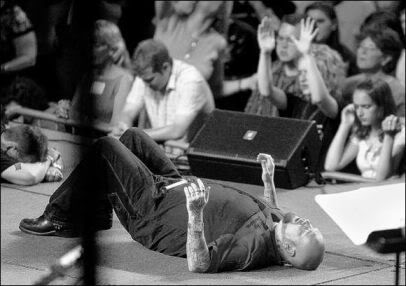
You have all the power you need at your disposal to live the Christian life. You are complete when you are in Christ: you have his fulness. The problem sometimes comes when believers expect or are told that they only have the Spirit or are only baptized in the Spirit when they fall over, or when they show the so-called “evidence” of speaking in tongues. Paul asked rhetorically “Do all speak in tongues?” (1 Corinthians 12:30). The clear answer according to Paul is “No”, because if the whole body were a tongue there would be no feet, no hands and no ears (verses 12-25). The insistance that we all speak in tongues comes from a failure to understand the three times recorded in Acts (over the span of many years) in which people did speak in tongues. The true evidence of Spirit baptism is how a person lives out his or her faith in the real world.
WHAT POWER IS FOR
What is power in the Christian life? What is it for? Is it so that we can roll around on the floor and speak in a language no-one understands? No, it’s for living the Christian life as Christ taught us. Peter put it this way:
“His divine power has given us everything we need for a godly life through our knowledge of him who called us by his own glory and goodness. Through these he has given us his very great and precious promises, so that through them you may participate in the divine nature, having escaped the corruption in the world caused by evil desires” (2 Peter 1:3-4).
We have divine power, says Peter, so that we can live the Christian life. It isn’t about strutting around and claiming to be super-spiritual. If we really are tapping into that power says Peter, it will be evident in the way we live:
“For this very reason, make every effort to add to your faith goodness; and to goodness, knowledge; and to knowledge, self-control; and to self-control, perseverance; and to perseverance, godliness; and to godliness, mutual affection; and to mutual affection, love” (verses 5 -7).
Christians try to tell us that we can only be effective if we get that alleged endowment of power after salvation, but here Peter has a different idea. He’s telling us that being effective means using what we’ve already been given in order to live in love and goodness:
For if you possess these qualities in increasing measure, they will keep you from being ineffective and unproductive in your knowledge of our Lord Jesus Christ. But whoever does not have them is nearsighted and blind, forgetting that they have been cleansed from their past sins. Therefore, my brothers and sisters, make every effort to confirm your calling and election. For if you do these things, you will never stumble. (verses 8-10).

It all goes back to the words of Jesus, who never said “Those who speak in tongues and fall over a lot will enter the kingdom of heaven”. What he did say is that pretending to have spiritual power is meaningless. Instead it’s the reality of our Christian walk which demonstrates genuine faith, and which will get us into the kingdom:
“Not everyone who says to me, ‘Lord, Lord,’ will enter the kingdom of heaven, but only the one who does the will of my Father who is in heaven. Many will say to me on that day, ‘Lord, Lord, did we not prophesy in your name and in your name drive out demons and in your name perform many miracles?’ Then I will tell them plainly, ‘I never knew you. Away from me, you evildoers!’ (Matthew 7:21-23).
YOU HAVE IT!
“But whoever is united with the Lord is one with him in spirit” (1 Corinthians 6:17).
Ask yourself this: How could anyone be one with the Lord and still be incomplete? How can anyone be one with the God of heaven and earth and still be powerless? The accusation should be treated with the contempt it deserves.
If you are in Christ due to your repentance and acceptance and public confession of the gospel of Jesus Christ, you have all the fullness of the deity at your disposal. The question is not “Do you have it?” the question is “Are you going to use it?”. How much of you does the Holy Spirit of God have?
FILLING OF THE SPIRIT
To be filled with the Spirit controlled and directed by Him, not in a mechanical way in which you lose control of yourself, but to willingly be at his disposal because you are living for Him. You are walking in faith and making yourself available to be used by Him. He may empower you unexpectedly. He may use you in all sorts of ways.
THE MATTER OF SPEAKING IN TONGUES
I’ve written extensively on the subject of tongues. You can search “tongues” in my little search box and numerous posts will be presented.
Some think that anyone filled with the Spirit is going to be speaking in tongues, falling over and having visions. They will be great speakers and display power over demonic forces. What they’ve missed is all the references to people in Acts who were filled but who didn’t do any of these things. In Acts chapter six we find believers being chosen to wait on tables because they were known to be full of the Spirit (Acts 6:1-5). Immediately after Pentecost Peter being filled with the Spirit spoke to the rulers and elders of Israel in their language (and his). Stephen, full of the Spirit as he died, spoke in language plain for all to understand (Acts 7 :55-56). The Spirit is given for you to be a witness to the world in the way you live and how you treat others. It’s for the Lord and for other people: not for your betterment or for you to strut around and send out virtue signals.
A charismatic gift does not make the believer into a “powerful” Christian. Paul noted that the Corinthians were claiming to be rich in spiritual gifts, yet he told them,
“Brothers and sisters, I could not address you as people who live by the Spirit but as people who are still worldly—mere infants in Christ” (1 Corinthians 3:1).
Again, it’s how you live your faith out which makes you “powerful”.
ONE SPIRIT
There is only one Holy Spirit. You cannot receive the Holy Spirit at salvation and yet not have the Spirit living in you, with all His potential. The New Testament tells us that the indwelling Holy Spirit is vital for many blessings and functions. For example, you cannot be raised to eternal life without Him:
“But if Christ is in you, then even though your body is subject to death because of sin, the Spirit gives life because of righteousness. And if the Spirit of him who raised Jesus from the dead is living in you, he who raised Christ from the dead will also give life to your mortal bodies because of] his Spirit who lives in you” (Romans 8:10-11).
SANCTIFICATION
The Holy Spirit is required to wash and to sanctify the believer:
But you were washed, you were sanctified, you were justified in the name of the Lord Jesus Christ and by the Spirit of our God (1 Corinthians 3:11).
THE TEMPLE OF GOD
Here’s something else the Spirit is required for. Paul explained to the Corinthians that they as believers were the temple of God:
Do you not know that you are a temple of God and that the Spirit of God dwells in you? (1 Corinthians 3:16 NASB).
The newer version of the NIV has added the words “your midst” to the end of this verse, changing its meaning somewhat. The KJV states it this way:
Know ye not that ye are the temple of God, and that the Spirit of God dwelleth in you? (KJV).
This is the New King James Version:
Do you not know that you are the temple of God and that the Spirit of God dwells in you? (NKJV)
The ESV says:
Do you not know that you are God’s temple and that God’s Spirit dwells in you?
The New Revised Standard Version:
Do you not know that you are God’s temple and that God’s Spirit dwells in you? (NRSV).
BAPTIZED INTO THE BODY OF CHRIST
In short, most or all serious translations tell us that the Holy Spirit lives in us, and that we as believers – all true believers – are the temple of God. To clear up any doubt on the issue, let’s read what Paul told the Corinthians:
For as the body is one and has many members, but all the members of that one body, being many, are one body, so also is Christ. For by one Spirit we were all baptized into one body—whether Jews or Greeks, whether slaves or free—and have all been made to drink into one Spirit (1 Corinthians 12:12-13 NKJV).
Note the word “baptized” used by Paul. The body of Christ includes all believers who are joined eternally by baptism into it. No-one outside of that body is in Christ, and anyone in the body has been baptized into it by the Holy Spirit. Also, says Paul, they have all been given the same Spirit. He wrote the same thing to the Ephesians:
There is one body and one Spirit, just as you were called to one hope when you were called; one Lord, one faith, one baptism; one God and Father of all, who is over all and through all and in all (Ephesians 4:4-6).

STAND STRONG, BELIEVER!
“In all” says Paul, not “in some”. We can’t be one with Jesus Christ and not be united with the Holy Spirit. How then can we point a finger at any believer and tell him or her that they are deficient, incomplete, half-baked and powerless? This is an insult to our Lord and to the believer. It’s a confession of human pride; an “I’m better than you” attitude which needs to be repented of.
FREE BECAUSE OF THE SPIRIT
But whenever anyone turns to the Lord, the veil is taken away. Now the Lord is the Spirit, and where the Spirit of the Lord is, there is freedom. And we all, who with unveiled faces contemplate the Lord’s glory, are being transformed into his image with ever-increasing glory, which comes from the Lord, who is the Spirit (2 Corinthians 3:16-18).
The Spirit IS the Lord, says Paul, and the Lord is the Spirit. If you turn to the Lord, you are turning to the Spirit and you have freedom in Christ. Don’t let anyone deny you that knowledge. Further, Paul said here that we are ALL being transformed into the image of Christ-not just some of us. Isn’t that the goal, after all? Without the Spirit you would not have forgiveness, salvation, resurrection, or freedom. But you have all these things and more in Christ.

THE CHURCH UNIVERSAL
Becoming a Christian places you into the universal Church of Jesus Christ. The spiritual entity known as the Church is formed only by the all-pervading work of the Spirit of Christ within every believer. Paul’s description of the spiritual state of the Church universal, that is, the spiritual union of all true believers with each other and with Christ, no matter which denomination, entails our being baptized by the Holy Spirit into the body of Christ:
Just as a body, though one, has many parts, but all its many parts form one body, so it is with Christ. For we were all baptized by one Spirit so as to form one body—whether Jews or Gentiles, slave or free—and we were all given the one Spirit to drink. Even so the body is not made up of one part but of many. Now if the foot should say, “Because I am not a hand, I do not belong to the body,” it would not for that reason stop being part of the body (1 Corinthians 12:12-15).
Nobody can tell their foot that it doesn’t belong to their body: that would be nonsense. In the same way, nobody should try to tell you, if you are a true believer in Jesus, that you don’t have the Holy Spirit in you.
ALIVE AND FREE BECAUSE OF THE SPIRIT
Paul wrote that freedom from sin and death is yours through the Holy Spirit, once you take that step of faith by accepting Jesus Christ and his truth:
But whenever anyone turns to the Lord, the veil is taken away. Now the Lord is the Spirit, and where the Spirit of the Lord is, there is freedom. And we all, who with unveiled faces contemplate the Lord’s glory, are being transformed into his image with ever-increasing glory, which comes from the Lord, who is the Spirit (2 Corinthians 3:16-18).
The Spirit IS the Lord, says Paul, and the Lord is the Spirit. If you turn to the Lord, you are turning to the Spirit. Further, Paul said here that we are ALL being transformed into the image of Christ-not just some of us. Isn’t that the goal, after all? Without the Spirit you would not have forgiveness, salvation, resurrection, or freedom. But you have all these things and more in Christ.
YOU ARE COMPLETE IN CHRIST
“Ah” says the “super-spiritual” Christian, “You only have a part of the Lord-you need more of him by obtaining the second blessing and speaking in tongues”. But Paul says no- if you have Jesus Christ, you have ALL of God:
For in Christ all the fullness of the Deity lives in bodily form, and in Christ you have been brought to fullness (Colossians 2:6-10).
To paraphrase and extrapolate from the above verse and its context: Don’t take notice of anyone attempting to tell you that you aren’t complete in Jesus Christ, because ALL of the Godhead lives in Jesus, and so if you have Jesus, you have all of God. You don’t need to be “slain in the Spirit” and fall over to be complete; you don’t need to speak in tongues to be complete, and you don’t have to give to any ministry to be complete. You are complete already in Christ. You have all of God. The only question is, how much of you are you giving to God? Being “filled” with the Spirit is something we can do or not do on any given day, because this filling relates to how much you’re allowing yourself to be controlled by the Spirit at any given moment, that’s why Paul said we should be “filled with the Spirit” (Ephesians 5:18). Note that being filled with the Spirit does not mean that you’re “better” or on a higher plain in human terms, or that you should be held up in awe by all: the early church leaders chose seven men, “known to be full of the Spirit”, to….distribute food! (Acts 4:1-6).
There is a pernicious, damaging lie that if you haven’t been baptized in the Spirit as a second blessing some time after salvation, you can’t be effective as a Christian. From experience I can tell you that some claiming to be full of the Spirit or baptized in the Spirit can be very un-Christ like and even offensive. It’s not what you claim to have or do that matters, it’s how you actually live for Christ: that’s where the rubber meets the road. It’s really all about how much you’re prepared to be submitted to the Spirit of God in your life, in the way you act and talk and think.
THE REAL WAY TO EFFECTIVENESS
Peter, partaker of the events of Pentecost, also declared that we are complete in Christ. God didn’t hold back-he gave you everything you need!
His divine power has given us everything we need for a godly life through our knowledge of him who called us by his own glory and goodness (2 Peter 1:3).
It’s our knowledge of Jesus-knowing Him and walking with Him in our daily lives-that gives us all the divine power we need.
Peter went on to tell us how to be effective for Christ, and is doesn’t involve anything like falling over backwards, or speaking in tongues, or giving all your money to a particular ministry. He said:
For this very reason, make every effort to add to your faith goodness; and to goodness, knowledge; and to knowledge, self-control; and to self-control, perseverance; and to perseverance, godliness; and to godliness, mutual affection; and to mutual affection, love. For if you possess these qualities in increasing measure, they will keep you from being ineffective and unproductive in your knowledge of our Lord Jesus Christ (verses 5 to 8).
It’s such qualities as self-control and love which make us effective. Peter didn’t tell us to speak in tongues so that we could do these things, but to make an effort to do them. This is where submission to the Holy Spirit comes in. If we walk with Him, and build on our knowledge of Him, and if, as Peter says, we make an effort, we will then be living as we should live.
 Fuel for Faith, Food for Thought