
If there’s no God to dictate what’s good and what isn’t good, who decides what’s true and what isn’t? Who should determine right from wrong? In a world where God doesn’t exist there can be no absolutes: there is no ultimate right or wrong except what humanity decides is so. “Good” and “bad” are entirely subjective concepts, and open to change. To paraphrase a certain president from not long ago, “Truth is fluid”.
PLATO’S PREDICAMENT. The secular apologist will insist that in a democracy we can decide the good and the bad for ourselves. We come to an intelligent and informed consensus and then elect a government to enact that consensus. This would work perfectly in Utopia – that country over there somewhere – but what about the real world where there are millions of different opinions, twisted personalities and a multitude of power-hungry individuals? Interestingly many of the people who claim that a government voted in by a majority of people should decide what’s good and what isn’t, will wail and gnash their teeth over the fact that Donald Trump and the Republicans won the last general election in the United States.
Democracy only pays when you’re winning, and we could all ask ourselves a very difficult question: “Can there really be any such thing as democracy?” Plato would be discouraged to see how the world is doing 2400 years after his writings, and without the intervention of God we may as well resign ourselves to an eternity of political and social unrest.
PARASITES. Godless logic frequently betrays the futility of its philosophical position, like the emperor who swaggers while showing off his new suit of invisible clothing. As an example I want to replay one of my reviews of the BBC’s ongoing series, “In Our Time”, on the subject of parasites in nature. In the course of the podcast it was becoming clear to host Melvyn Bragg and his listeners that parasites commonly have a symbiotic relationship with their own hosts, meaning that one depends heavily upon the other to stay alive. It was also clear that the three learned and influential evolutionists being interviewed were avoiding any expression of amazement at this relationship. To his credit, Melvyn popped the question:
“So you’re definitely saying that sometimes parasites can have a positive and good effect?“
The answer Melvyn and the rest of us received, given with a certain sense of irritation, is as follows:
“Well, the trouble is that words like “positive” and “good” don’t really belong in biology-it turns into ‘theology’ then” (1).

TURNING THINGS INTO THEOLOGY. At least this evolutionist is being consistent with his beliefs, but if he’s correct we need to purge such words as “good” and so “bad” from other fields of human experience, otherwise we’re turning them into “theology”. If we confine these designations to theology only, we have no measure of what is… good or bad. How do we then make any choices or decisions at all without being totally random and arbitrary? By taking the evolutionist’s comment on its natural course and applying it to history or politics or statistics, all this whining about who colluded with who, and who gassed who, and who blew up who and who owes who what becomes superfluous and pointless, since there is no such thing as good or bad; positive or negative.
We could invoke the “ethics” word and say that this is a matter for ethicists to decide, but then ethics is really just secular theology, and we’re trying to apply ethics to politics, law and order and government. We’ve made government into God. Let’s be consistent!
The best we can say is, “I like the fact that Trump blew up Iran’s nuclear facilities” or, “I don’t like the fact that Trump blew up Iran’s nuclear facilities” (and now “facts” can be denied or changed). We can’t speak out and say, “He was right”, or “He was wrong!” because that would be applying “theology” or “religion” to foreign policy. There can be no discussion about whether it was right or wrong of him to take that action. If words like “positive” and “good” don’t belong in biology but only in theology, what is cancer or a rupture, or Covid 19? Are these neutral issues which have no effect one way or the other on human bodies – “biology” – or are they perhaps “bad”? If they are bad, isn’t there a “good” also? Isn’t a successful operation a good thing? Wouldn’t it be “good” to find a cure for cancer?
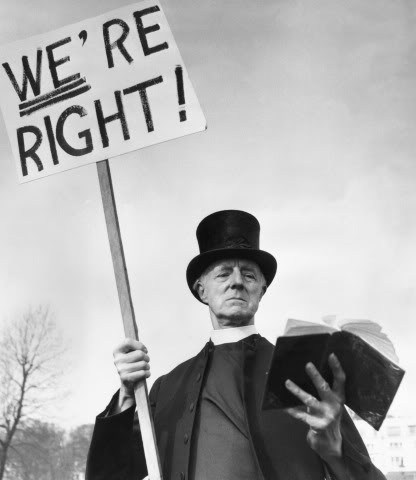
THE TRUTH. Let’s just say it: sometimes parasites can still be a “good” thing, because they preserve and facilitate life. The symbiotic relationships they thrive in are often “good” for us and other life forms. Sometimes parasites are “bad” because they attack and destroy. In the beginning God saw all that He had made and called it “good” (Genesis 1:31). This included parasites, at a time when all was as it should be. Theology? Yes indeed! Theology is inextricably linked to all of life, and to death.
THE BLIND LEADING THE BLIND. Richard Dawkins, in dumping on the world his view of “blind, pitiless indifference” which he thinks the cosmos displays, was attempting to strip us all of any hope and meaning we may have in life. What’s happening, in case you didn’t notice, is that the godless among us – the priests of Neo-Darwinian evolution – want to separate two things which are inseparable: existence and meaning. They want us all to think that the physical universe has no purpose, no design, and no Person involved in its creation, its processes or its destiny. The real “blind, pitiless indifference” is in the minds of those who ignore God and who deny design in nature.
THE METHODOLOGY OF THE GODLESS. Stephen Meyer, a leader in the Intelligent Design movement, with a PhD in the philosophy of science from the University of Cambridge, writes about a principle of evolutionary science in his book, “Darwin’s Doubt”. “Methodological naturalism”, aka “methodological materialism” is a presumed rule of science, he says. It asserts that to qualify as scientific, a theory must explain phenomena and events in nature…by reference to strictly material causes only. In other words, there must be no reference to God, explicit or implicit. In other words, any study of nature which considers the possibility of design or the hand of God is invalid and isn’t science, in their view. Meyer writes,
“According to this principle, scientists may not invoke the activity of a mind or, as one philosopher of science puts it, any “creative intelligence”.
Meyer also relates a now famous (or infamous) quote by Harvard geneticist Richard Lewontin, laying out his own version of the “ban God” rule:
“We take the side of science in spite of the patent absurdity of some of its constructs…because we have a prior commitment, a commitment to materialism…for we cannot allow a Divine Foot in the door”.
NOTES
1: Steve Jones, Emeritus Professor of Genetics at University College, London. BBC Radio 4 “In Our
 Fuel for Faith, Food for Thought