
As in science, secular historians tend to ignore and trash Biblical accounts, even though archaeological finds frequently embarrass them and prove them wrong. Today I’m aiming more at some implications of secular accounts of history, and going beyond history I’m looking at the border between mythology and actual realities of the past. Listening to two very secular BBC podcasts recently related to ancient Mesopotamia, I was inspired to hear many indirect references to Biblical themes. I offer here a collection of observations and confirmations which the BBC and their expert panels would never endorse or agree with. My subtitle is, “Fish People and Fishy People: Between the Lions”.
This is a very long post! Scroll down to subtitles if you want to. Please forgive me for any ugly ads or gaps inserted by WordPress software.
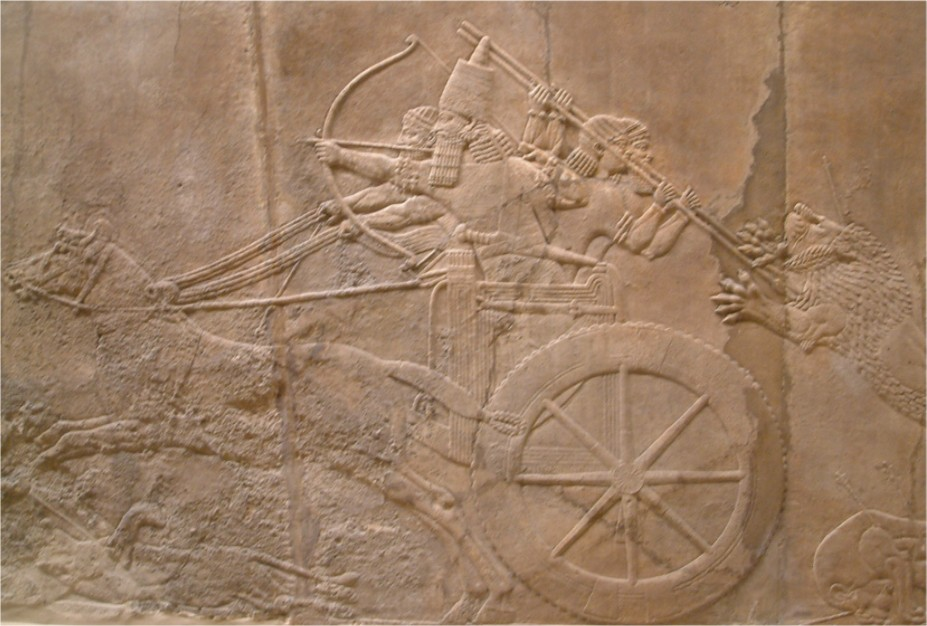
THE FIRST CIVILIZATION. As an introduction to a discussion on ancient Babylon host Melvynn Bragg begins thus: “Six thousand years ago between the Tigris and the Euphrates the first cities were being built”. The Bible agrees-almost. Biblical history of human civilization, acknowledged to be written before Christ, begins in this very area. The Bible was ahead of the earliest archaeologist, though the secular historian will now insist that the Bible was simply plagiarising earlier knowledge. In fact, modern archaeological finds repeatedly serve to confirm much of what the Bible recorded long ago. I’ve written about some of these truths before, for example, in my post, “The Significance of the Ruins of Nineveh”.
TIME AND TIDES OF MEN. What about secular timelines? Was it really “six” thousand years ago? Did the founders of ancient Babylon really begin their journey there ten thousand years ago? Archaeological finds are compared with each other, and scholarly experts speculate and brainstorm to arrive at dates for truly ancient events. Carbon dating sometimes guides the decision, but you can’t date stone or copper tools that way, and tribes around the world have used stone tools even up to modern times. I’ve seen Native American stone tools in museums which were no more than two or three hundred years old. The stone age didn’t necessarily end thousands of years ago as secular experts insist.
CARBON DATING. Carbon dating is (and can only be) used to help date organic remains-not stone. Christian archaeologist Douglas Petrovich (among others) has demonstrated the weakness in Carbon dating. It can certainly be considered when dating something as far back as the time of Christ or shortly before, but beyond that the dates begin to get out of sync with other known facts of history. Researchers are aware that the further they go back in time the more unreliable Carbon dating becomes, so that estimates and speculation-and doubtless a measure of bias- all come into the equation when setting dates for the very distant past. C14 decays far too soon to date anything presumed to be millions of years old. Add to this the possibility that levels of parent isotopes and decay rates may have been different thousands of years ago. Assumptions are made about the distant past which can’t be checked without a time machine.
FROM NOMADS TO BARDS. It’s interesting that while we sometimes hear about civilizations in China or South America existing perhaps ten or twenty thousand years ago or more, the common agreement is that hard evidence of the first civilizations begin in Mesopotamia just a few thousand years before Christ. Before that people were “nomadic” or were living in very small agricultural communities, but suddenly they decided to build huge cities and start writing poetry. In podcast “Babylon” Panel expert Elleanor Robson is asked to tell us about the history of the region of Mesopotamia, which is modern Iraq. She says that farming developed in a mountainous region to the north of the area around ten thousand BC, or in her words, BCE. At that time, she says, what is now the south of Iraq was very marshy.
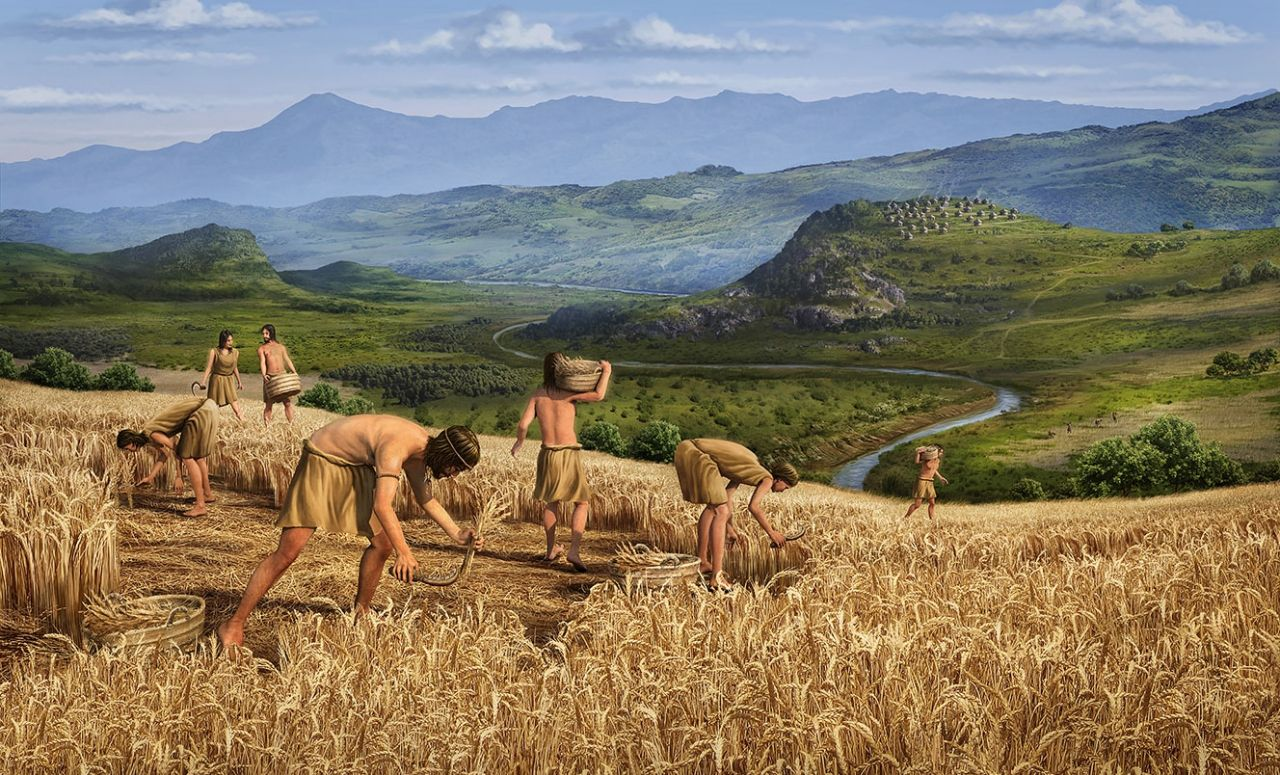
I remember learning about the marshes of Mesopotamia at school, and the canals built there. It seems they were far more substantial as the Sumerians entered the land than they are now and were a part of the Fertile Crescent.
Elleanor tells us that nomads and farmers began to move southward away from their farms in a mountainous region to the north and admits that the reason why isn’t clear. “It’s difficult to know” she says. They began to live in larger towns and villages but there’s “no clear explanation”. She suggests that they needed to organize for food production and to deal with the hostile marshy environment, or maybe to protect themselves from “other peoples or wild animals”. Perhaps it was also because of the development of religion, she says: the first towns and cities had temples-cultural, economic and physical centres- at their very hearts. The panel concludes the idea by observing that it was a “mysterious” move from nomadic life to agriculture and then to city life, between ten to six thousand years ago.
THE BIBLICAL EXPLANATION. The Biblical explanation is simply that as the human population increased after the Flood people began to gather and multiply on the plains and to build cities. They had moved from where their ancestors first landed after the Flood in the mountains of modern Turkey-which just happened to be to the north-east of Mesopotamia-and started to build cities. I mention the Flood partly because the subject is an important part of the podcast we’re considering today. It also has a bearing on human history, because, going back to early civilization, we find in Scripture that within a few hundred years of the Flood humans were gathering on the plains of… Mesopotamia, and building cities there. Genesis chapter 10 says of Nimrod, a great leader:
“The first centers of his kingdom were Babylon, Uruk, Akkad and Kalneh, in Shinar” (Genesis 10:10).
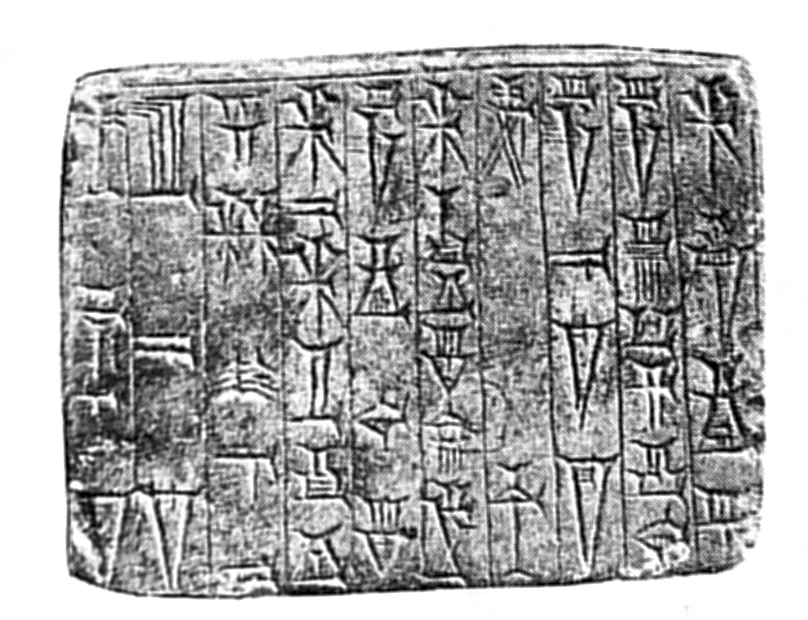
Dr. Petrovich has documented evidence that Nimrod was aka Sumerian King Sargon II. Ancient leaders commonly were known by more than one name. Egyptian pharaohs would assume at least one new name upon their ascension to the throne.
RAPID DEVELOPMENT. What is most remarkable to me is that even according to secular observation humans suddenly and rapidly developed writing and all kinds of endeavors and studies: they were not stupid, ignorant and gross people crawling out of the stone age. It’s well known that ancients were very clever. So clever in fact, that we still don’t know how they designed and built many of the structures we can see around the world today, such as the pyramids. The Biblical truth is that humans were created with intelligence: all they had to do was develop and put that intelligence to use. Certainly, war, famine, disease and climate challenges have all held back development and still do in some parts of the world.
Elleanor tells us that the very first cities were large and “complex” social organisms made up of tens of thousands to hundreds of thousands of people. They practiced law and order, manufacturing, trade, writing, bureaucracy and social organization. It’s estimated that the first writing began in 3000 BC and they say it was in order to organise, manage and keep accounts, in the cities of Ur and Uruk.
Panelist Irving Finkel also speaks about the beginnings of this first civilization. The first group of people who migrated into Mesopotamia were the Sumerians around 3000BC (I’ve heard other “expert” testimony date this at “around” 5000 BC). It was a literate culture even then. Babylon came to prominence in the 2nd Millenium, then Assyria. These people groups understood the basis of geometry and understood principles we credit Greek Pythagoras for. They established the foundations of civilized life.
Irving tells us that while the first motive for writing was primarily administrative, once writing was developed-and from its earliest manifestations-it was not only concerned with day-to-day life, but “there was an intellectual input from very early on”. I wonder how is it that people who were supposed to be intellectually primitive so quickly took an interest in literature such as poetry, astronomy, astrology and geometry? By 1700 BC “literature flourished”. In the 7th century BC Hammurabi established a law code.
Eleanor informs us that we owe the origin of astronomy to the Babylonians. It’s hard to separate science and religion from that time, she says, because they were seen as part of the same system. In 8th C BC the Babylonians recognized five of the planets and looked for patterns in the way they moved, because the heavenly bodies were signals from the gods. Babylonians gave us the 60 mins and 360 degrees system. We have fully developed mathematical texts dealing with mathematical and geometrical problems from early in the 2nd Mill BC. The Babylonians anticipated the findings of Pythagoras over a thousand years before him.
CLAY TABLETS. Andrew George says we have all this knowledge of ancient Mesopotamia from clay tablets which they created, and there are thousands of tablets still not examined. A vast amount was written, and much of it survived because it was written on clay tablets. The podcast, “The Library at Nineveh” shares the fact that 28, 000 tablets have been found. I personally wonder why thousands of tablets are left unexamined. Could it be that they say things our modern anthropologists don’t want to hear?
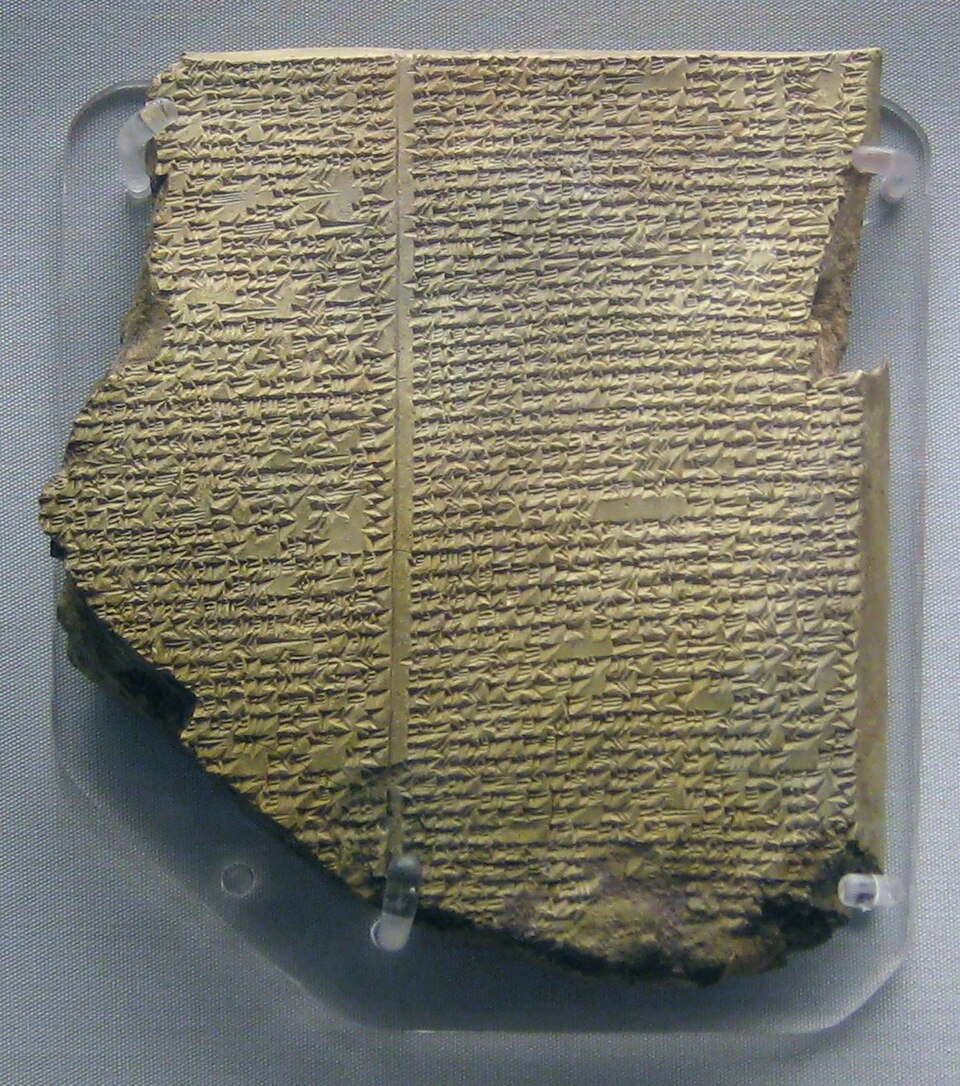
We’re told that most other civilizations wrote on papyrus, not clay. The clay tablets endured but for the most part papyrus did not. I noticed in these podcasts and others that experts have the nerve to tell us that Mesopotamian writing on topics such as the Flood must have come before Hebrew scripture and other writings, and so were clearly plagiarised, yet their writings survive because they were recorded upon clay. While Israelites were literate, and the Pentateuch tells us that Moses “wrote down” the words of God (Deuteronomy 31:9; Exodus 24:4) Hebrews did not normally write on clay tablets. The ten commandments were and exception and were written upon by the finger of God.
Elleanor speaks a little about Nebuchadnezzar who ruled the Neo-Babylonian empire much later. He is, nonetheless, one of many Biblical characters evidenced by modern archaeology and can be found in the book of Daniel.
THE BIBLICAL STORY OF BEGINNINGS. Reading the Biblical account of human history we find that humans were intelligent from the first day of creation. However, the first human civilization was destroyed by God because it had become so corrupt and violent. God sent a Flood upon the world, so that “the world that then was, perished” (2 Peter 3:6). We read in Biblical Scripture that the entire earth was destroyed by water. Images of little boats floating on calm waters while the rain dripped are totally inadequate, and creationists such as Dr. Timothy Clarey have shown that the sedimentary-most commonly water-borne-layers of rock we see in such places as the Grand Canyon are actually representative of the crust of the entire world. Layers found in North America are also found on other continents. In other words, geology, when observed without secular bias, speaks very loudly of a global flood.
Add to this the fossil record, found within those water-borne layers, which is also global. Ask yourself how animals of all descriptions-including huge ones- can be fossilized over millions of years. They cannot. They have to be buried rapidly in deep sediments in order for their form to be preserved, and often they are preserved in exquisite detail. In some places entire herds of thousands of huge dinosaurs, or entire schools of whales are found, and in other places colossal graveyards are found containing numerous species of animals and plants all found buried together. Marine creatures or their remains are found buried with land animals. This all speaks very loudly of the Flood.
BAD PRESS? At the outset of the “Babylon” podcast Melvyn observes that Babylon has been given a “bad press” until recent times. It’s associated with the Tower of Babel where, says the Bible, God confused their language because of their intentions; Nineveh “where Jonah was sent to preach repentance”. Most famously, says Melvyn, it’s associated with “Mystery, Babylon the Great, the Mother of Harlots” – the whore of Babylon who in Revelation is taken to personify the city itself. Herodotus also described the city as decadent: effeminate and lascivious. “But what’s the true story?” asks Melvyn, and therefore in one phrase sweeping away the “bad press” given Babylon by Scripture and by history. “There’s an increasingly vocal contingent which believes that Babylonian culture has been hugely undervalued”, he continues.
Elleanor explains that we have a negative image of Babylon because of Israeli history and Biblical literature. “Of course, the cuneiform tablets give us a more positive picture”.
Melvyn asks Irving why Babylon is spoken of so negatively in the Bible. “Why is Babylon characterised by a whore in the Bible, and why did Herodotus describe it as markets selling wives and temples selling sex?” Irving answers, “I’ve never quite understood why Babylon has such a bad press”. He then proceeds to trash fifth century BC historian Herodotus, leading us to think we can’t rely on his writings. However, Irving acknowledges that when Herodotus writes about women-even wives-offered themselves in the temples of ancient Babylon, that this is “an echo of something that was probably real”, judging by Mesopotamian sources.
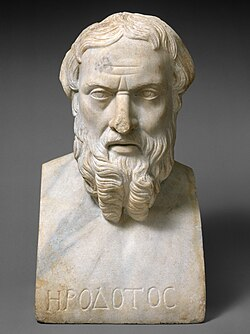
Melvyn repeats that the Old Testament dismissively speaks of Babylon in terms of being a whore. The panel collectively dismisses the Biblical view of Bab being one of iniquity and vice as being rumour and the superstition of people who weren’t there and had an axe to grind against the later Persians. I would note that the panel-experts notwithstanding-were not there either, but of course the know so much more than those who lived closer to the time. Similarly they insist that the Jews wrote negatively about Babylon because Babylonians “were not Israelites”.
BAD PRESS AND RELIGION. The following discussion about religion in ancient Babylon is clearly far more pertinent to the claims of an unfair press than the panel realize. Andrew tells us that we have an enormous number of written sources for how that religion was practised, including hymns, prayers and ritual text to individual deities and describing what went on in their temples. Each of the cities “belonged” to one of the deities. The god of Babylon was Marduk. “There was a huge pantheon of deities, rather like the Greek pantheon where gods and goddesses existed with different functions in the universe”.
What the learned panel completely missed or didn’t bother to touch upon was that it was the multitude of deities in opposition to the one true God which leads Scripture and specifically God to refer to Babylon in terms of whoredom and immorality. It’s more a spiritual immorality which the Bible speaks of, though the physical and fleshly form of whoredom was undoubtedly there also. The physical side of immorality leads in the short term to all kinds of consequences for humanity, such as disease and societal instability. More relevant is that fact that it leads to judgment for this very reason. Paul, writing about those who live to gratify the desires of the flesh, says:
“I warn you, as I did before, that those who live like this will not inherit the kingdom of God” (Galatians 5:21).
The panel’s worst Biblical ignorance, or its crass refusal to mention the truth while discussing such a relevant subject, concerns the matter of spiritual adultery for which ancient Babylon is used as a metaphor in the book of Revelation. She had always lusted after other gods rather than the one true God. She had trusted in astrology and divination, not in God. In fact, she was the first civilization to do so. Her spiritual adultery was therefore always in Scripture a metaphor or simile for that of others, including the last human empire which Revelation speaks of.
Further than this, Babylon personifies an arrogant and prideful spiritual aloofness, attempting to take the place of God in the hearts and minds of men. Rather than simply giving an ancient civilization and city a “bad press”, such an attitude is an affront to the creator of all things and is destructive to the pinnacle of His creation-mankind. Her own physical end still has a future judgment to come, along with all those who’ve lived according to the principles she established on those plains:
“Sit in silence, go into darkness,
queen city of the Babylonians;
no more will you be called
queen of kingdoms…
Your wisdom and knowledge mislead you
when you say to yourself,
‘I am, and there is none besides me.’
All the counsel you have received has only worn you out!
Let your astrologers come forward,
those stargazers who make predictions month by month,
let them save you from what is coming upon you” (Isaiah 47:5; 10b; 13)

GILGAMESH AND THE FLOOD. Andrew George is first called upon to tell us about an epic Mesopotamian work of poetic literature which contains the story of Gilgamesh. In it Gilgamesh encounters the one man who survived the flood which destroyed the world, having searched for the man who he believed held the secret of perpetual life and freedom from death.
This masterpiece of ancient Mesopotamian literature was first written four thousand years ago. At this point, says Andrew, Mesopotamian literature “was already old”. Gilgamesh was a great king of Uruk-the first city of culture-and a tyrant. People complained about his tyranny and the gods sent his counterpart Enkidu. The two fight but then become great friends. They go on an adventure together to the far cedar forest where they kill the ogre protecting the wood of the forest. Back in Uruk Gilgamesh insults the goddess of sex, and he sends the god Torus after him, but Gilgamesh and Enkidu kill him. The gods then kill Enkidu. Grieving the loss of his great friend, Gilgamesh goes off in search of immortality. On that search he finds the one man who survived the Flood and who has lived endlessly.
I want to be clear that I don’t believe stories of fish people and fighting with gods such as Torus. However, I do toy with the Biblical inference that fallen angels descended to cohabit with people, and that this possibility is the stuff of much mythology around the world.
I noticed Melvyn was pronouncing the words “the man who survived the Flood” in a sneering sort of way, because, of course, that’s the one big joke in the entire study. Continuing, Irving comments that “The Flood story is one of our most famous tablets”. “The text runs in close parallel with the Genesis narrative”. Irvine comments on the British coming to know about the Gilgamesh Flood story, and claims that the Church was astonished in a negative way to find a Flood narrative which apparently preceded the Biblical version.
MANY FLOOD LEGENDS. If it’s true that the Church in the nineteenth century saw the Gilgamesh story as somehow disproving the Biblical Flood account, the opposite is true in present day creationist circles. Many Flood accounts have emerged from ancient cultures around the world, including the Gilgamesh epic, which only seems to further confirm the Bible’s story-see Flood Legends | Answers in Genesis. There’s no smoke without fire, and as I said above, the world’s fossils and sedimentary rocks are very strong visible support for it all. Mel asks Irvin to “put it very bluntly“: Which came first? he asks. Irving replies that he thinks there can be no question that the Biblical writers “drew on the heritage which they learned in Babylon….” and worked it into their own narrative for their own purposes”
As I noted above the insistence that the Babylonian Flood “myth” must have come first because we have their clay tablets pre-dating Hebrew writing and that therefore the Hebrews plagiarized the story is disingenuous and hypocritical. The panel already admitted that we have all this Mesopotamian testimony because they used clay while others used papyrus and leather which decayed quickly. Even if the Gilgamesh epic was written down first-and it may have been- this is not evidence against the worldwide Flood or in favor of the idea that the Hebrews stole the idea for their own purposes.
Stick around while I comment on a second podcast. The above is a critique of the BBC’s “In Our Time, BABYLON” episode, first aired in June 2004, with Host Melvyn Bragg. The expert panel included Eleanor Robson, Senior Lecturer in the History and Philosophy of Science at Cambridge University; Irving Finkel, Curator in the Department of the Ancient Near East at the British Museum; Andrew George, Professor of Babylonian at the School of Oriental and African Studies.

THE FLOOD AND THE LIBRARY AT NINEVEH
The subject of the Flood and the Gilgamesh epic continued in a subsequent episode of “In Our Time”. Several interesting and related comments were made, some of which I share here.
Andrew George goes into more detail about the Babylonian Flood myth. He states that it was, “very, very similar to the story everyone knew-the story of the Flood in Genesis”. It’s very old “like most of the mythological literature in the library”, the earliest literary texts dating to 1100 years before Ashurbanipal. It’s written in the Babylonian dialect of Accadian and is a “masterpiece” of ancient poetry.
While Andrew would never consider that any part of the epic was factual he admits that it, “…deals with very human individual concerns-the desire for fame and the fear of death“. I would agree that much of the Gilgamesh story is surely mythical, but since it considers “very human concerns” perhaps that’s a clue that there is a measure of truth in it, and I personally believe fully that the Flood was a genuine event in human and earth history.
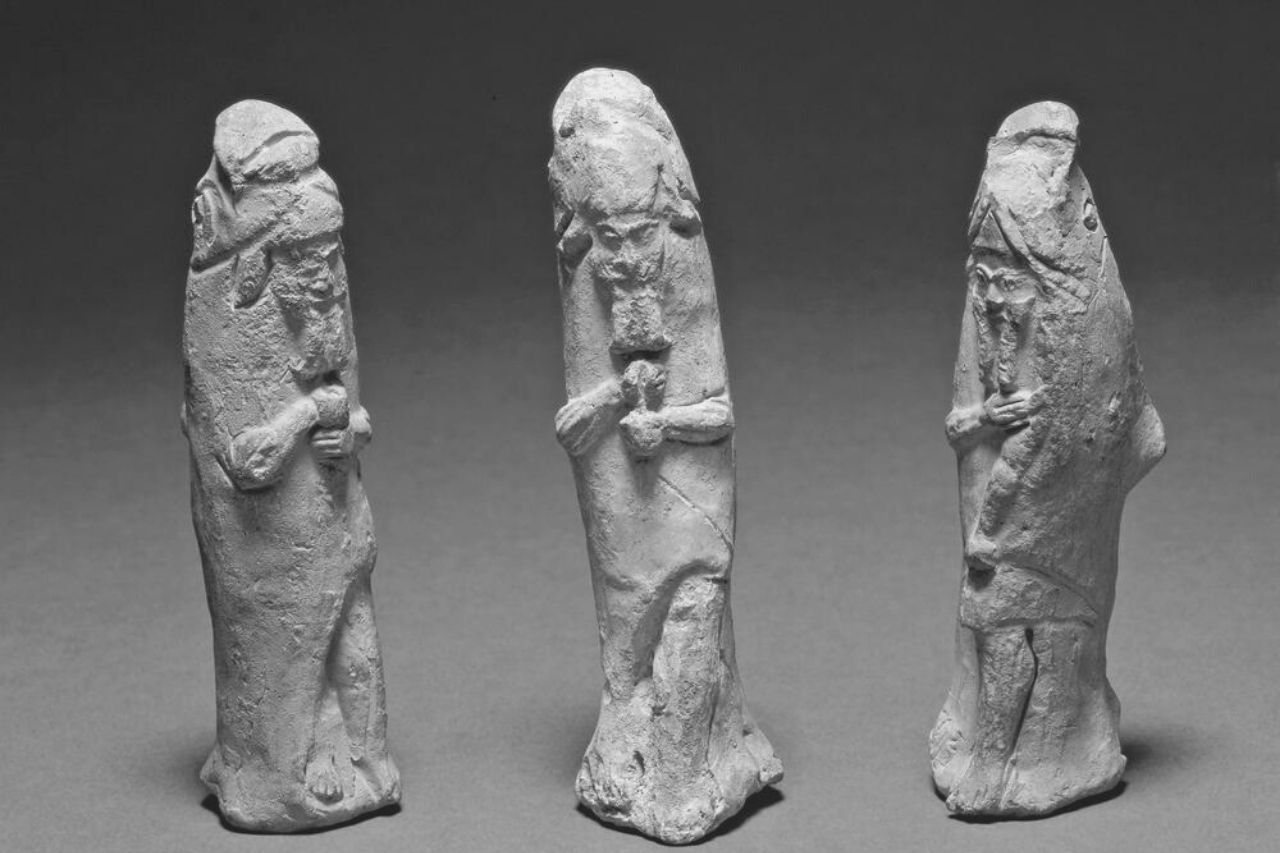
To Karen Radner Melvyn askes the question, “The Babylonians believed that the Flood separated mankind from the gods. What was the world like before the Flood?” She answers that according to the Babylonians humans lived to a ripe old age. They didn’t die of disease or death from childbirth and other things like this, but only from natural causes. She says their lifespans ran into thousands of years. Humans communicated with the divine world, facilitated by “messengers” of the gods who lived among humans in the shape of fish-people. The fish-people spent their lives in the sea but their days were spent among people on the land. They gave humans advice and knowledge on things like kingship and how to reign, divination, law, agriculture and everything pertaining to Mesopotamian culture.
Anyone knowledgeable of Old Testament Scripture is aware that it says people lived very long lives before the Flood, though the longest is some nine hundred years, not thousands. After the Flood, according to Genesis, lifespans shortened exponentially. Genesis also records a very controversial passage about “the sons of God” coming down to earth against the will of God, and co-habiting with humans and even procreating with them. These “sons of God” who are regarded by many to be fallen angels, were judged along with mankind in the Flood. Somehow their offspring persisted for some time after the Flood. The Bible also records the story of Jonah (after the Flood) who was swallowed by a huge fish and dumped on the shore some distance from Nineveh. Jonah had been commissioned to preach repentance at Nineveh, and somehow his story of the great fish delivered considerable clout there.
Karen continues: “Then at some point there was the Flood”. Two things changed, she says: people were susceptible to disease and no longer lived many hundreds of years, and secondly the fish creatures did not return. Direct communication with the divine was interrupted. Human scholars replaced the fish creatures, and they started by recalling everything they remembered from before the Flood. The Flood had happened thousands of years before, says Karen, and it separated the golden age from the age they were living in.
Melvyn remarks that the fish motif persisted. Eleanor replies that yes, the scholars continued to wear fish cloaks, and the hats resembled a fish head with the top of the head as a fish’s open mouth. The cloaks had fins around the upper arm level, and a tail around knee height. There are images carved in stone of these scholars performing rituals. Letters to the king and queen found among clay tablets compliment scholars on being as wise as the fish sages.
Karen tells us that Gilgamesh wandered into the depths of the sea during his adventures, and Andrew talks about how Ashurbanipal said he had learned knowledge which had descended from before the Flood. There were differing traditions as to how that knowledge had survived. One was that all human knowledge had been buried on tablets. Another is that when Gilgamesh visited the Flood hero-the man we know of as Noah-where he had learned the story of the Flood, he brought back the knowledge of ante-diluvial culture and scholarship.
Note that the Bible speaks of Ashurbanipal:
“…and the other people whom the great and honorable Ashurbanipal deported and settled in the city of Samaria and elsewhere in Trans-Euphrates” (Ezra 4:10).
The Bible also speaks of Neo-Babylonian King Nebuchadnezzar (Daniel chapter 4).
Andrew informs us that besides the clay tablets found from Babylon there were writings in other materials, chiefly wax-covered writing boards, common in Assyria and Babylonia in 7th C BC. However, these disintegrate, he said. We know that Ashurbanipal received far more on wax writing boards than he did on clay tablets. When he commissioned scholars to copy texts they were written on waxed wooden boards, not on clay tablets, presumably because they were lighter and easier to transport.
The above discussion was held on the BBC’s “In Our Time” episode, “THE LIBRARY AT NINEVEH”. It was first broadcast in 2008, with host Melvyn Bragg. Guests Eleanor Robson, Senior Lecturer at Cambridge University and Vice-Chair of the British Institute for the Study of Iraq; Karen Radner, Lecturer in the Ancient Near Eastern History at University College London; Andrew George, Professor of Babylonian at the School of Oriental and African Studies at the University of London

