
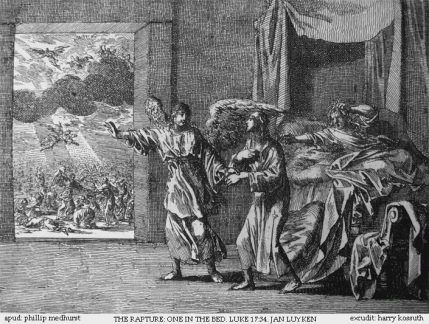
A common view I once shared claims that when Jesus said, “one will be taken, the other will be left” (Matthew 24:40-41), he was speaking of a surprise rapture at some time before the tribulation. The one taken would be the raptured believer: the one left behind would be the unbeliever or a failed believer.
This idea first leads me to ask about “the saints who obey God’s commandments and remain faithful to Jesus” during the tribulation (Revelation 14:12). As some of those “left behind” in a pre-tribulation rapture are going to be half-baked believers in Jesus Christ according to the theory, and since others will be saved by the grace of God through faith in Jesus Christ just as we are now (Revelation 12:11) why is it that we pre-tribulation believers should be blessed with an escape from the perceived outpouring of the wrath of God on the earth, while those future saints will have to live through it?
A far more logical explanation is that we will all be treated equally and raptured together; that all believers will be called upon to be witnesses to Christ during the tribulation, and that, as I wrote in early excerpts of my book, the wrath of God which we believers will all escape is eternal judgment, not temporal earthly suffering. Refer again to the millions of believers who have suffered persecution, plague or natural disasters around the world through the centuries, and continue to do so: were they incurring the wrath of God in their suffering? No, it was the wrath of man and the devil, and the consequences of living in a fallen world.
Verses in the Olivet Discourse about one being taken and the other left are warnings to the godless. Jesus gives two examples of sin requiring judgment in preparation for the phrase we are reviewing. The first is the sin of those destroyed by the Flood at the time of Noah:
“…and they knew nothing about what would happen until the flood came and took them all away. That is how it will be at the coming of the Son of Man” (verse 39).
The wicked were “taken away” by the waters in the judgment of the Flood, said Jesus. It was Noah and his family who were left behind. Jesus continues:
“That is how it will be at the coming of the Son of Man. Two men will be in the field; one will be taken and the other left. Two women will be grinding with a hand mill; one will be taken and the other left” (verse 39-41).
The ones “taken” are taken in judgment, just as the wicked were taken away by the Flood, says Jesus.
In the second example Jesus speaks of a wicked servant who, on the realization that his master is staying away for a long time, begins to beat his fellow servants and to get drunk. In response to the servant’s actions, Jesus said:
“The master of that servant will come on a day when he does not expect him and at an hour he is not aware of. He will cut him to pieces and assign him a place with the hypocrites… “ (Matthew 24:48-51).
The wicked servant was not aware of the day or the hour of his master’s return and was taken by surprise. He was sent into punishment when his master suddenly returned. It’s within this context that the phrase “one will be taken, the other left” is used. Therefore, it’s not speaking of a pre-tribulation rapture, but the time of wrath and judgment which will occur at the end of the tribulation. Even if this phrase were referring to a pre-tribulation rapture, there’s no indication of a seven or more-year gap between the rapture and judgment, and Scripture is clear that the wrath of God will fall at some time after the beginning of the reign of Antichrist (see my posts on rapture and wrath).

